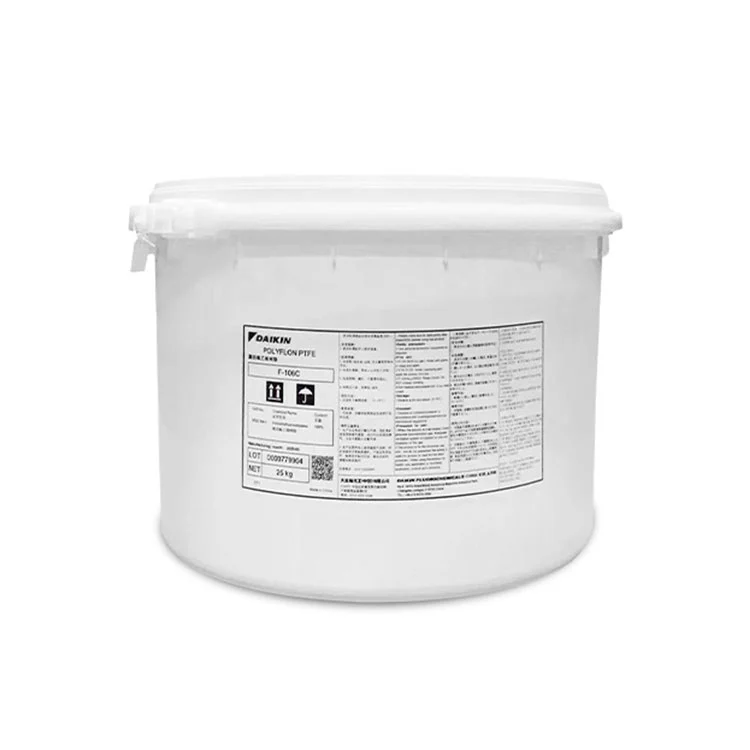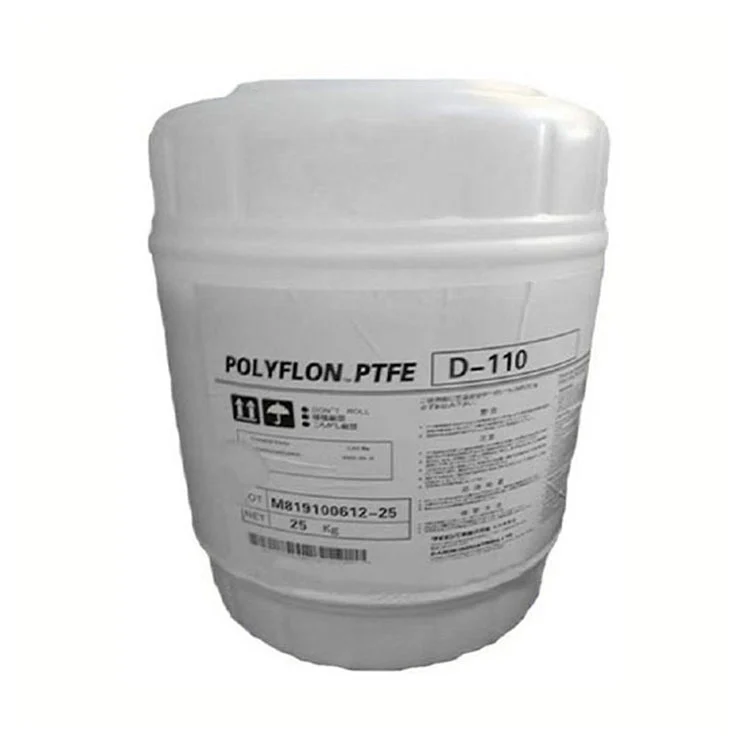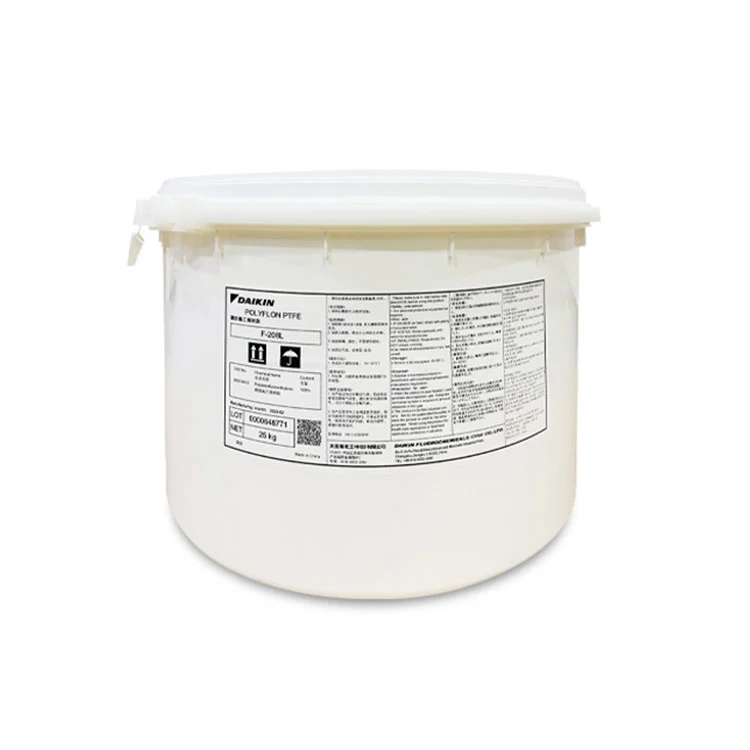

Grade selection depends on the intended product, extrusion process, reduction ratio, product dimensions and required mechanical or electrical properties. Nianjing supplies PTFE Dispersion Resin according to manufacturer, grade, application, processing requirements and quantity. For replacement projects, the existing grade number and current TDS provide a useful basis for material matching.


PTFE Dispersion Resin is a fine PTFE powder designed for paste-extrusion processing. Its processing behavior differs from PTFE suspension resin, which is generally used for compression molding, ram extrusion and related forming processes. Dispersion grades develop fibrillation under suitable shear conditions, allowing the material to form continuous extruded structures.
Before extrusion, the resin is normally mixed with a suitable extrusion aid to form a paste. The paste is preformed and forced through a die, after which the processing aid is removed and the PTFE is sintered. The final product properties depend on the resin grade as well as paste preparation, extrusion conditions, product geometry and thermal processing.

Reduction Ratio (RR) is an important parameter for selecting PTFE paste-extrusion grades. It provides a reference for matching the resin with the required extrusion geometry. Fine-diameter and thin-wall products may require grades with specific RR characteristics, while other product designs may require a different processing range.
Standard Specific Gravity (SSG) is commonly reported for PTFE resins and can be used as a reference when comparing grades. It should be evaluated together with mechanical and processing data rather than used as a standalone indicator of suitability.
Tensile strength and elongation are relevant when the finished product must withstand pulling, bending, pressure or repeated movement. These values are grade-specific and should be taken from the manufacturer's current TDS.
| Selection factor | Why it matters |
| Product type and dimensions | Help define the required extrusion grade |
| Reduction Ratio | Reference for paste-extrusion grade selection |
| SSG | Useful for grade comparison |
| Tensile strength and elongation | Relevant to finished-product mechanical performance |
| Processing equipment | Die and equipment conditions affect processing |
| Electrical requirements | Important for wire and cable applications |
| Purity requirements | Relevant to controlled or contamination-sensitive uses |
PTFE dispersion resin is used to produce wire and cable insulation where electrical insulation, chemical resistance and temperature resistance are required. For fine or thin-wall insulation, the resin grade needs to match the conductor diameter, insulation thickness, extrusion equipment and dimensional requirements.
Specialized cable applications may also require grade-specific electrical-property data.
Paste extrusion is widely used for PTFE tubing and other continuous profiles. The required grade depends on tube diameter, wall thickness, reduction ratio, extrusion conditions and mechanical requirements.
For small-diameter or thin-wall tubing, extrusion behavior and dimensional control become particularly important.
Selected dispersion grades can be processed into PTFE tapes and other sealing materials for chemical, mechanical and fluid-handling applications. The resin should be evaluated together with the required density, tensile properties, flexibility, dimensional stability and forming process.
Some PTFE dispersion grades are used to produce porous structures and membranes through controlled stretching and related processing methods. For filtration applications, resin selection is only one part of the specification. Porosity, pore-size distribution, permeability, tensile properties and the final membrane structure also need to be considered.
PTFE does not behave as a conventional melt-processable thermoplastic. PTFE dispersion resin is therefore mainly processed by paste extrusion and other specialized forming methods rather than standard injection molding or conventional melt extrusion.
A typical paste-extrusion process follows:
Resin selection → extrusion-aid mixing → paste preparation → preforming → paste extrusion → removal of extrusion aid → sintering → final inspection
Processing conditions should follow the manufacturer's recommendations for the selected grade and product geometry. Mixing ratio, paste preparation, aging conditions, extrusion pressure, die design and sintering profile can vary between grades and production requirements.
For a new material or replacement grade, a production trial can help confirm extrusion pressure, surface quality, dimensional stability and the performance of the finished product.
A practical material comparison should use the manufacturer's current TDS and, where available, batch-specific documentation.
| Technical information | Purpose |
| Reduction Ratio (RR) | Helps match the grade to the extrusion requirement |
| Standard Specific Gravity (SSG) | Reference for resin comparison |
| Tensile strength | Finished-product mechanical performance |
| Elongation | Flexibility and deformation characteristics |
| Particle characteristics | Relevant to paste preparation and extrusion |
| Electrical properties | Important for wire and cable applications |
| Purity data | Relevant to controlled applications |
| Processing recommendations | Grade-specific guidance for paste extrusion |
| Batch information / COA | Useful for incoming material verification |
During incoming inspection, the manufacturer, grade number, batch information and documentation should first be confirmed. The resin can then be evaluated against the specified SSG, RR, mechanical properties and other applicable requirements.
Depending on the application, finished-product testing may also include dimensional stability, tensile properties, electrical performance, chemical resistance or other application-specific tests.
Common procurement documents include:
Compliance should be confirmed for the exact grade and intended end use. A general PTFE resin designation should not by itself be treated as evidence of suitability for food contact, medical, pharmaceutical, semiconductor or other controlled applications.
PTFE Dispersion Resin should be kept in its original packaging and stored according to the manufacturer's specified conditions. Protect the material from moisture, contamination and unnecessary mechanical handling. Clean handling is particularly important for electrical, filtration and other contamination-sensitive applications.
For procurement, a practical specification can follow:
Manufacturer → Grade → Product Type → Reduction Ratio → Product Dimensions → Processing Method → Critical Properties → Required Documents → Quantity
For a new tubing project, provide the tube diameter, wall thickness, extrusion method, target RR range and required mechanical properties.
For wire insulation, provide the conductor diameter, insulation thickness, production process and electrical requirements.
For membrane applications, provide the intended membrane structure, processing route and target porosity, permeability or other relevant properties.
For replacement material, the existing manufacturer, grade number and current TDS are the most useful starting points. This information allows the material requirement to be compared with alternative grades without relying only on a generic PTFE designation.
Nianjing can source PTFE dispersion resin according to the required manufacturer, grade, application, processing conditions, documentation and quantity.


It is mainly used for paste extrusion and related processes to produce PTFE tubes, thin-wall tubing, wire and cable insulation, tapes, sealing materials and selected porous or microporous structures.
The main difference is their processing behavior. Dispersion grades are designed to develop fibrillation during paste extrusion, while suspension grades are generally processed through compression molding, ram extrusion and related methods.
Reduction Ratio (RR) is a processing parameter used when evaluating paste-extrusion grades. It helps relate the resin to the required extrusion geometry and is particularly relevant to fine and thin-wall products.
No. The appropriate RR depends on product dimensions, extrusion equipment, die design and processing conditions. The grade should be selected according to the actual product requirement rather than simply choosing the highest RR.
They are not normally processed by standard injection molding because they do not behave as conventional free-flowing thermoplastic melts. Paste extrusion and other specialized PTFE forming methods are commonly used for these materials.
For a new requirement, provide the product type, dimensions, processing method, target RR or extrusion requirements, critical mechanical or electrical properties and quantity. For replacement material, the existing manufacturer, grade number and current TDS are the most useful references.
Address
China Plastics City, Yuyao City, Ningbo City, Zhejiang Province, China
Tel
Looking for a specific plastic material, brand, grade or quantity? Send your requirements to Nianjing for sourcing and availability confirmation.
Please include the material name, manufacturer or brand, grade, quantity, application and delivery requirements when available. If you are unsure about the grade, simply describe your application and requirements.
Nianjing will review your inquiry and check suitable sourcing options based on your requirements.