PA66 Nylon Resin is an engineering thermoplastic used for components that require a balance of strength, stiffness, wear resistance, heat resistance, and chemical resistance. Different grades can be reinforced or modified to meet mechanical, thermal, electrical, wear, and environmental requirements.
Nianjing sources PA66 grades for injection molding and other plastic processing applications. Buyers can specify a producer and grade or provide the required application and performance profile for material selection.

PA66, also known as polyamide 66 or nylon 66, is produced from hexamethylenediamine and adipic acid. Its crystalline structure contributes to its mechanical strength, stiffness, wear resistance, and thermal performance.
Moisture absorption is an important characteristic of the material. Water taken up from the surrounding environment can affect dimensions, stiffness, strength, and electrical properties. This should be considered when PA66 is used for close-tolerance or moisture-sensitive components.
| Property | General Reference |
| Material | Polyamide 66 / PA66 |
| Density | About 1.12–1.15 g/cm³ for unreinforced grades |
| Melting Point | Around 255–265°C |
| Tensile Strength | Grade dependent; commonly around 70–90 MPa for unreinforced grades |
| Flexural Modulus | Grade dependent; commonly around 2,500–3,000 MPa for unreinforced grades |
| Moisture Absorption | Higher than many non-hygroscopic engineering plastics |
| Main Processing Method | Injection molding |
These values are general references, not specifications for all PA66 grades. Reinforcement, additives, moisture condition, test method, molding conditions, and producer formulation can affect the actual results. The current producer TDS should be used for grade qualification.
Unreinforced PA66 provides a combination of tensile strength, stiffness, toughness, and fatigue resistance. Reinforced grades can provide higher modulus and strength for parts requiring greater structural support.
PA66 is used in selected gears, bushings, rollers, guides, and other moving components. Friction and wear depend on load, speed, temperature, mating material, surface condition, lubrication, and grade formulation.
PA66 has a relatively high melting point and can be used in applications involving elevated temperatures. Heat-stabilized grades are available for components exposed to longer periods of thermal loading.
PA66 has resistance to many oils, greases, fuels, and commonly encountered chemicals. Compatibility depends on the chemical, concentration, temperature, exposure time, and grade. Strong acids and certain aggressive chemicals require separate evaluation.
Selected PA66 grades are used for connectors, terminal components, switches, housings, and other electrical parts. Depending on the application, CTI, dielectric properties, flame performance, moisture exposure, and dimensional stability may need to be considered.
Moisture is one of the main material-selection considerations for PA66.
Water absorbed by the polyamide can act as a plasticizer and change its mechanical behavior. Depending on moisture content, the material may show:
These changes are particularly relevant to precision gears, bearings, connectors, housings, and other close-tolerance components.
Where moisture-related dimensional changes are difficult to accommodate, PA12, PA612, or selected semi-aromatic polyamides may be considered, depending on the required temperature resistance, chemical resistance, toughness, and cost.
PA66 is available in different formulations rather than as a single universal material. Grade selection depends on the mechanical requirements, processing method, service environment, and applicable regulatory requirements.
| Grade Type | Main Purpose | Typical Applications |
| Unreinforced PA66 | Balanced mechanical properties | Clips, housings, general mechanical parts |
| Glass-Fiber Reinforced PA66 | Higher stiffness and dimensional control | Brackets, structural parts, automotive components |
| Heat-Stabilized PA66 | Improved long-term thermal performance | Elevated-temperature and under-hood parts |
| Impact-Modified PA66 | Higher toughness | Impact-loaded or low-temperature components |
| Flame-Retardant PA66 | Reduced flammability | Electrical and electronic components |
| Wear-Modified PA66 | Improved friction and wear behavior | Gears, bushings, guides, bearings |
| Hydrolysis-Resistant PA66 | Better resistance in hot and wet environments | Selected cooling and fluid-management parts |
| Low-Emission PA66 | Controlled emissions, odor, or VOC | Selected automotive applications |
A modified grade is not automatically a better choice. Reinforcement and additives can change flow, impact performance, shrinkage, warpage, surface appearance, and other properties. The grade should be selected against the complete part requirement.
Glass-fiber reinforcement is used when unreinforced PA66 does not provide enough stiffness, strength, creep resistance, or dimensional stability.
Glass-fiber contents commonly include 15%, 30%, and higher levels, depending on the producer and grade.
Increasing reinforcement can improve:
It can also affect impact toughness, melt flow, weld-line strength, surface appearance, shrinkage, warpage, and fiber orientation.
For precision injection-molded parts, fiber orientation and gate position should therefore be considered together with the material's mechanical data.
Flame-retardant PA66 is used for components with defined fire-performance requirements, particularly in electrical and electronic applications.
Applications include connectors, terminal blocks, switches, relay components, cable-management parts, electrical housings, and selected charging-system components.
The required flame classification, such as UL 94, must be confirmed for the specific grade and test thickness. CTI, insulation performance, dimensional stability, and restrictions related to the flame-retardant system may also affect selection.
A standard PA66 designation alone does not indicate flame-retardant or electrical compliance.
PA66 is used in selected automotive applications where mechanical strength, stiffness, heat resistance, chemical resistance, or dimensional stability is required.
Applications include under-hood components, air-intake and fluid-management parts, brackets, connectors, electrical housings, gears, and charging-system components.
For automotive applications, temperature, fluid exposure, vibration, fatigue, emissions, aging, and OEM requirements should be checked against the selected grade.
Applications include connectors, terminal components, switches, housings, cable-management parts, and other molded components requiring mechanical and electrical performance.
For demanding electrical applications, flame behavior, CTI, electrical corrosion, moisture exposure, and dimensional stability may require additional evaluation.
PA66 can be used for gears, rollers, bushings, guides, housings, brackets, and other mechanical components.
For moving parts, wear testing under the expected load, speed, temperature, and mating-material conditions is more useful than relying on generic friction data alone.
Common applications include handles, clips, fasteners, appliance components, cable ties, and other molded parts where the mechanical requirements exceed those of many commodity plastics.
Different polyamide families address different engineering requirements. PA66 should be selected according to the actual service conditions rather than by polymer name alone.
| Material | General Characteristics | Typical Reason to Consider |
| PA6 | Good toughness and processing balance | General engineering and molded components |
| PA66 | High strength, stiffness, and thermal performance in many grades | Structural and elevated-temperature applications |
| PA12 | Lower moisture absorption and good flexibility | Fluid lines, dimensional stability, low-temperature applications |
| PA612 | Lower moisture uptake than PA6 and PA66 with balanced properties | Precision and environmental applications |
| PPA | Higher temperature capability and lower moisture sensitivity than conventional aliphatic polyamides | High-temperature automotive and electrical parts |
These are material-family comparisons. Individual grades can overlap, so the final selection should be based on the producer's TDS and actual service conditions.
PA66 is moisture sensitive and normally requires controlled drying before molding. Drying conditions and allowable moisture content depend on the grade, packaging, storage history, and producer recommendations.
| Processing Factor | General Reference |
| Drying | Follow the producer's specified temperature and time |
| Melt Temperature | Commonly around 260–290°C, grade dependent |
| Mold Temperature | Often around 70–100°C; higher temperatures may be used for specific grades |
| Residence Time | Keep controlled and avoid unnecessary thermal exposure |
| Injection Speed | Adjust according to grade, geometry, and surface requirements |
These values are starting references rather than universal processing specifications.
Insufficiently dried PA66 can result in silver streaks, bubbles, surface defects, inconsistent molding, and reduced molecular weight or mechanical performance.
After drying, the material should be protected from moisture re-absorption before molding.
Mold temperature affects crystallization, shrinkage, surface appearance, and dimensional stability. For precision components, it should be considered together with packing pressure, cooling conditions, wall thickness, and gate design.
PA66 can continue to absorb moisture after molding. Consequently, the dimensions and mechanical properties of a newly molded part may differ from those reached after conditioning.
For tight-tolerance applications, dry-as-molded and conditioned properties may need to be considered separately.
The long-term suitability of PA66 depends on the combination of temperature, moisture, chemicals, mechanical stress, and exposure time.
For hot-water, coolant, or other wet environments, dry-state heat resistance alone is not sufficient for material selection. Hydrolysis resistance, retained mechanical properties, fluid compatibility, and long-term aging data should be reviewed for the selected grade.
For automotive cooling and fluid-management applications, relevant conditions may include:
Hydrolysis-resistant PA66 or another polyamide family may be considered where conventional PA66 does not provide the required long-term performance.
| Producer | Brand / Product Family |
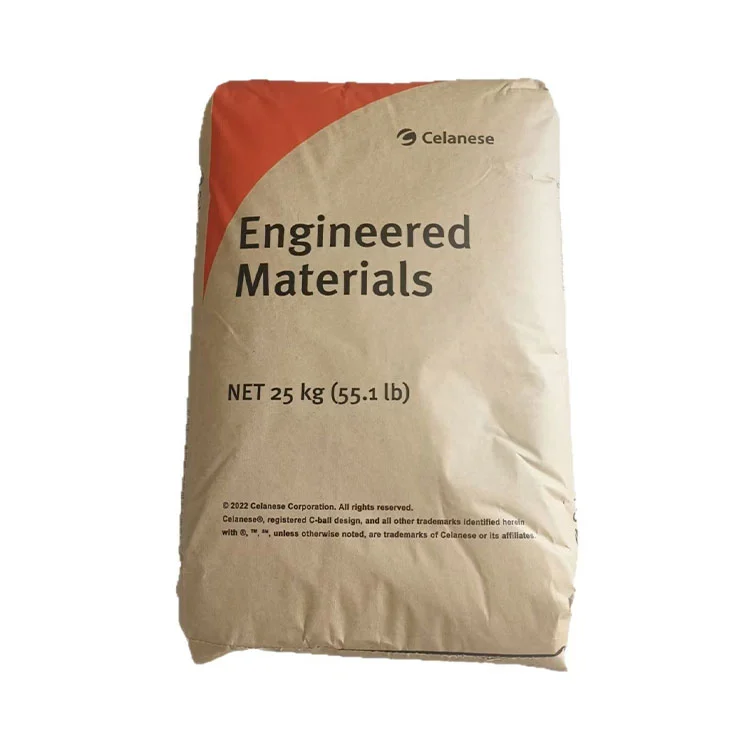
| Celanese | Zytel® PA |
| Celanese | Frianyl® PA |
| Toray | AMILAN™ |
| Envalior | Akulon® |
Zytel® and Frianyl® are examples of Celanese polyamide product families covering different PA formulations and performance requirements. Exact grade availability and specifications should be confirmed from current producer documentation.
Brand portfolios and commercial availability can vary by region. When sourcing a named grade, the exact producer, grade number, formulation, technical data, and current availability should be confirmed before purchase.
A request for "PA66 Nylon Resin" does not define a complete material specification. The following information helps identify a suitable grade.
| Procurement Item | Information to Confirm |
| Base Material | PA66 |
| Producer / Grade | Exact grade if known |
| Reinforcement | Unreinforced, glass fiber, mineral, or other |
| Glass-Fiber Content | 15%, 30%, 35%, 50%, etc., where applicable |
| Modification | Heat stabilized, impact modified, wear modified, hydrolysis resistant |
| Flame Requirement | UL 94 rating and test thickness |
| Flow | MFR or viscosity requirement |
| Mechanical Requirements | Strength, modulus, impact, fatigue, creep |
| Thermal Requirements | Service temperature, HDT, heat aging |
| Service Environment | Water, coolant, fuel, oil, chemicals, humidity |
| Electrical Requirements | CTI, insulation, flame performance |
| Appearance | Natural, black, or specified color |
| Processing | Injection molding or other process |
| Quantity | Trial, regular order, or project volume |
| Documentation | TDS, SDS, COA, and applicable compliance documents |
For replacement sourcing, the existing grade number and TDS are particularly useful. Candidate materials should be compared on both technical properties and processing conditions before production approval.
Nianjing is a plastic raw material trading and sourcing company based in Yuyao, Zhejiang, China. PA66 sourcing can be arranged according to a specified producer and grade or according to the required material characteristics when the original grade is not fixed.
For a sourcing inquiry, useful information includes the application, processing method, reinforcement or modification, target properties, quantity, destination, and documentation requirements.
This helps distinguish between different PA66 grades rather than treating all PA66 materials as interchangeable.
PA66 is used for automotive components, electrical connectors, industrial gears, bearings, bushings, brackets, clips, housings, and other engineering parts that require a combination of mechanical strength, stiffness, wear resistance, and heat performance.
Moisture absorption is an important consideration. Absorbed moisture can change stiffness, dimensions, mechanical properties, and electrical behavior. The expected moisture condition should be considered when designing precision components.
PA66 generally provides higher strength, stiffness, and thermal performance than PA6 in comparable grades, while PA6 may provide advantages in toughness and processing. The actual comparison should be made using the TDS of the grades being evaluated.
Glass-fiber reinforcement generally increases stiffness, strength, creep resistance, and dimensional stability. It can also change flow, shrinkage, warpage, impact performance, and surface appearance.
Selected PA66 grades can be used in hot-water and coolant environments. Long-term suitability depends on temperature, fluid composition, exposure time, mechanical stress, and grade formulation. Hydrolysis-resistant grades may be required for demanding conditions.
Confirm the producer and grade, reinforcement, modification, flow, mechanical and thermal requirements, service environment, color, quantity, destination, and required documentation. For replacement sourcing, the existing TDS should be provided whenever possible.
PA6 Resin · PA12 Resin · PBT Resin · POM-C Resin · POM-H Resin · PC Resin · PPA Resin
Address
China Plastics City, Yuyao City, Ningbo City, Zhejiang Province, China
Tel
Looking for a specific plastic material, brand, grade or quantity? Send your requirements to Nianjing for sourcing and availability confirmation.
Please include the material name, manufacturer or brand, grade, quantity, application and delivery requirements when available. If you are unsure about the grade, simply describe your application and requirements.
Nianjing will review your inquiry and check suitable sourcing options based on your requirements.