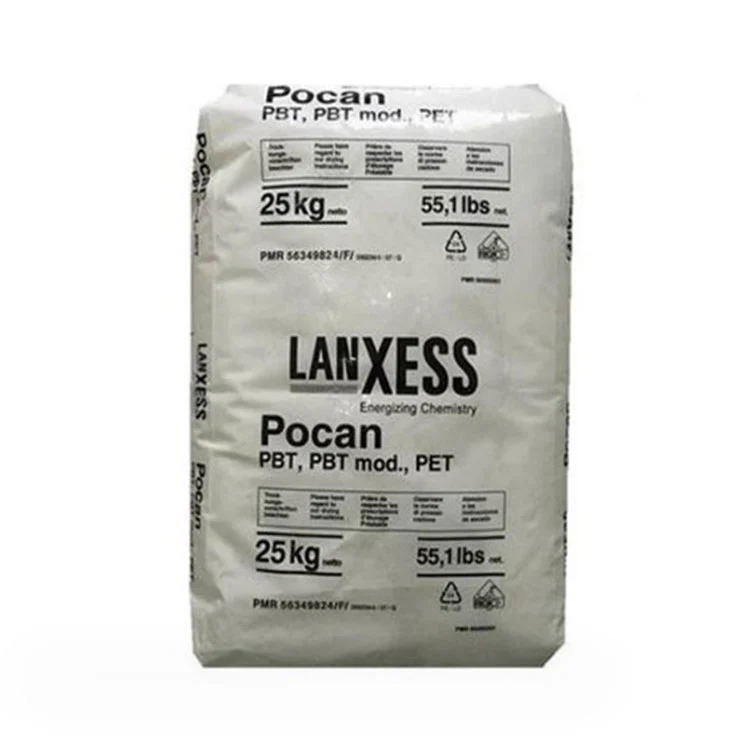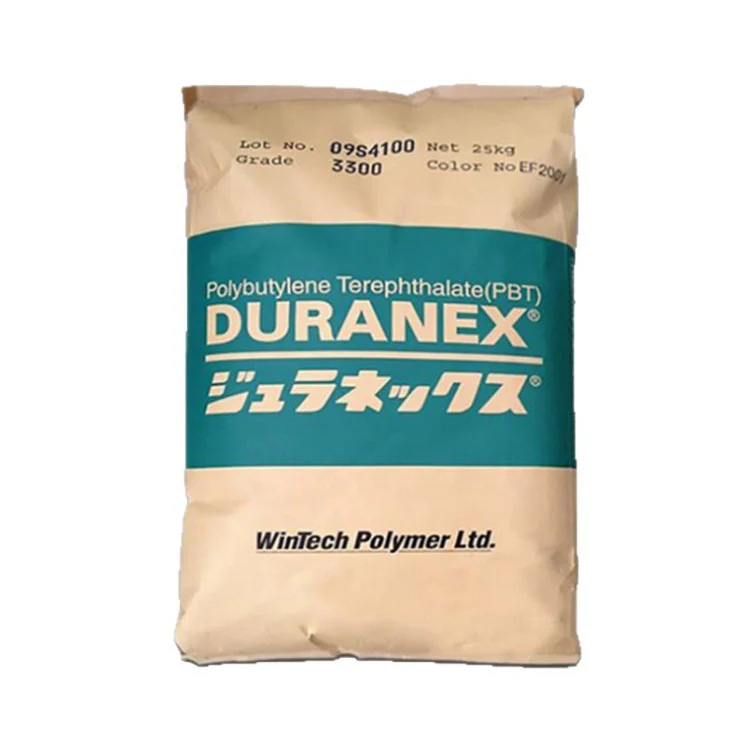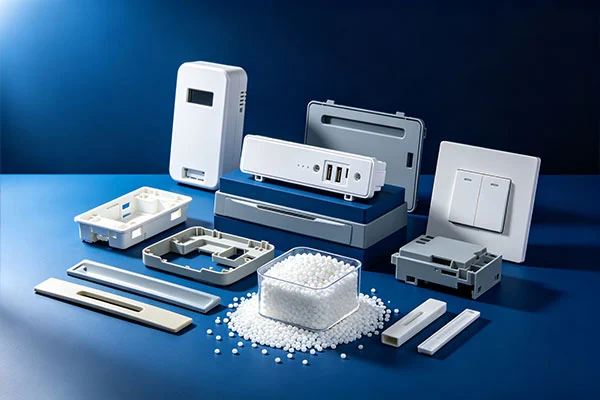
Connectors, sensor housings and other electrical components often need to maintain dimensional accuracy and electrical performance after repeated exposure to heat, moisture and chemicals. PBT Plastics are frequently considered for these parts because it combines dimensional stability with electrical performance and resistance to heat and chemicals.
The same material characteristics can be useful in automotive and appliance components where a molded part needs to retain its shape and function during service. Depending on the application, the resin may be supplied as an unreinforced grade or modified with glass fiber, flame-retardant additives or other formulations.
For an electrical connector, material selection involves more than mechanical strength. The resin also needs to meet the required insulation performance, dimensional tolerances and environmental conditions around the component.
PBT is used for connector bodies, terminal components, sensor housings, switches and other molded electrical parts where these requirements are important. Some grades are formulated for flame resistance or elevated-temperature service, while reinforced grades can provide greater stiffness for components that need to maintain a precise fit.
Depending on the electrical specification, grade selection may involve flame rating, tracking performance, temperature range and dimensional requirements. These properties should be checked against the technical data of the selected grade rather than assumed from the general material category.
Automotive electrical parts can experience combinations of heat, humidity, vibration and contact with fluids. PBT grades developed for these conditions can be used in connectors, sensor components, housings and other functional parts where stable mechanical and electrical performance is required over the service life.
Appliance components present a different set of conditions. Parts may encounter elevated temperatures, cleaning agents, moisture or repeated thermal cycles. The selected formulation therefore needs to match the appliance design and actual operating environment.
Where heat and moisture occur together for extended periods, hydrolysis resistance becomes an important consideration. This is particularly relevant to automotive electrical components exposed to hot and humid conditions, where long-term water exposure can affect polyester materials.
The required part performance determines whether an unreinforced or reinforced grade is more appropriate.
| Grade Type | Typical Reason for Selection | Points to Consider |
|---|---|---|
| Unreinforced PBT | General molded components, good flow and surface appearance | Part stiffness, dimensional requirements and operating temperature |
| Glass-Fiber Reinforced PBT | Higher stiffness, strength and dimensional stability | Fiber orientation, shrinkage, warpage and surface appearance |
| Flame-Retardant PBT | Electrical and electronic components requiring controlled flame behavior | Required flame rating, electrical properties and processing conditions |
| Hydrolysis-Resistant PBT | Parts exposed to heat and moisture for extended periods | Service temperature, humidity and expected operating lifetime |
Glass-fiber content and other modifications can change not only mechanical properties but also the way the resin fills the mold and shrinks after molding. For precision parts, the selected grade should therefore be considered together with part geometry and mold design.
Most PBT components are produced by injection molding. The material can be used for relatively complex geometries, but processing conditions still affect filling, shrinkage, surface appearance and final dimensions.
Wall thickness, flow length, gate location and mold temperature should be considered when selecting a grade for a production component. Reinforced materials require additional attention because glass fibers can cause different shrinkage rates along and across the flow direction.
Moisture control is also relevant before molding. Drying requirements should follow the selected manufacturer's technical data because excessive moisture can affect processing and the properties of the molded part.
PBT is often evaluated alongside other engineering resins when developing an injection-molded component. The relevant material depends on the performance requirements of the finished part.
| Material | More Relevant When | Examples of Applications |
|---|---|---|
| PBT | Electrical performance, dimensional stability, heat and chemical resistance are important | Connectors, sensor housings, switches and automotive electrical parts |
| PC Plastic | Impact strength, toughness or transparency is a major requirement | Housings, transparent components and impact-resistant parts |
| POM Plastic | Low friction, wear resistance and repeated mechanical movement are important | Gears, bushings, rollers, guides and sliding components |
| PA66 Nylon | High mechanical strength, stiffness and heat resistance are required | Automotive, structural and mechanical components |
The practical choice depends on the component's mechanical load, temperature, moisture exposure, electrical requirements, chemical environment and molding conditions.
When a production grade has already been approved, the manufacturer and grade number are usually the starting point. For a new application or material replacement, additional information helps identify suitable grades and possible alternatives.
Application: Connector, sensor, housing, appliance component, automotive part or other molded component.
Grade: Existing grade number or required material specification.
Manufacturer: Preferred manufacturer or acceptable alternative sources.
Reinforcement: Unfilled, glass-fiber reinforced or other modified formulation.
Performance: Required strength, stiffness, electrical, thermal, flame-retardant or chemical-resistance properties.
Service Environment: Temperature, humidity, water, chemicals, fluids and expected service conditions.
Processing: Injection molding method, part geometry and relevant dimensional requirements.
Nianjing sources PBT Plastics in China according to the required manufacturer, grade, application and quantity. The company operates in China Plastics City, Yuyao, Zhejiang, an established trading area for plastic raw materials and related supply channels.
As a China plastic raw material supplier, Nianjing's range extends beyond PBT to other engineering plastics and commodity resins, including PC Plastic, POM Plastic, PA66 Nylon, ABS, PP, PE, EVA, POE, TPU and specialty materials.
For a PBT sourcing request, manufacturers, distributors and industrial users can provide the required grade, manufacturer, application, quantity and destination. If the original grade is not fixed, the application and service conditions can be used as the basis for checking suitable options and possible alternatives.