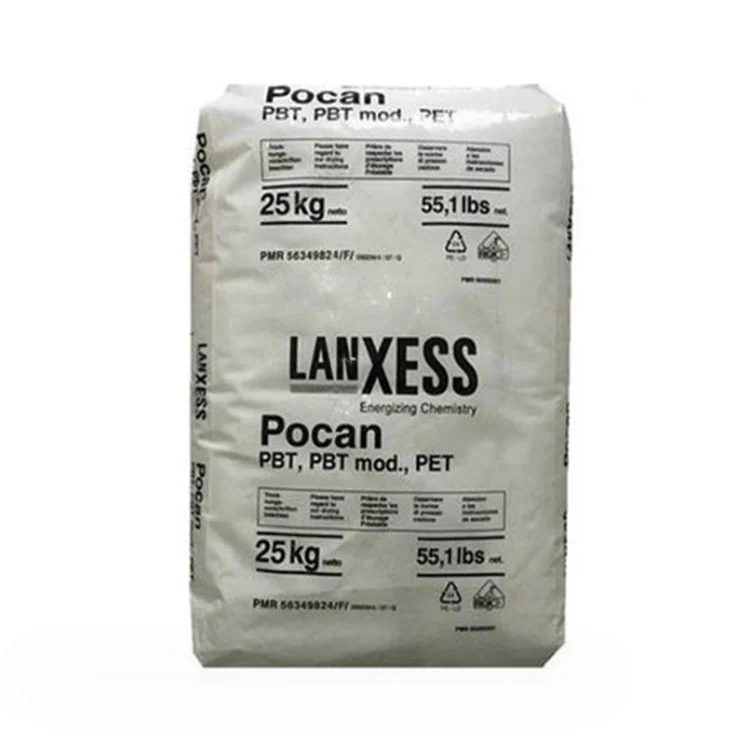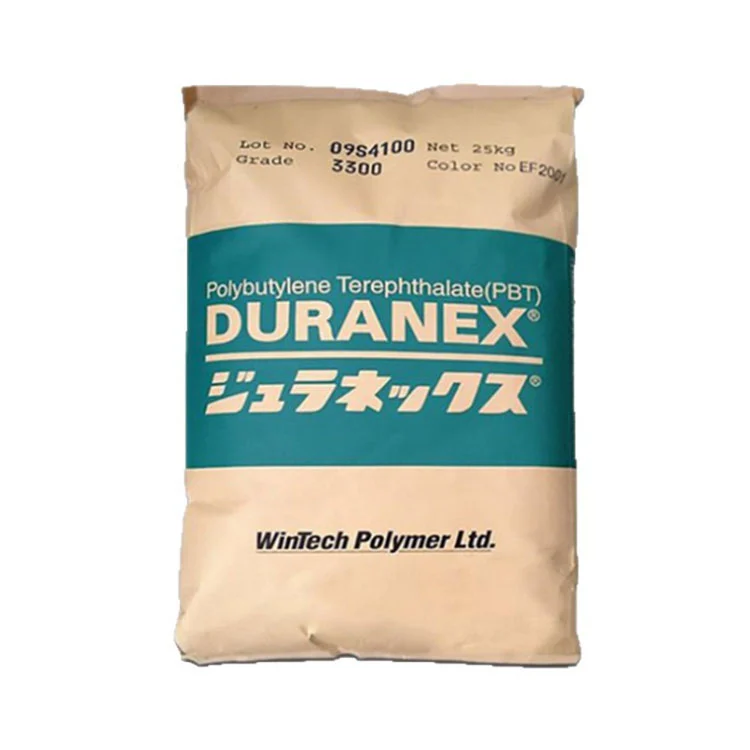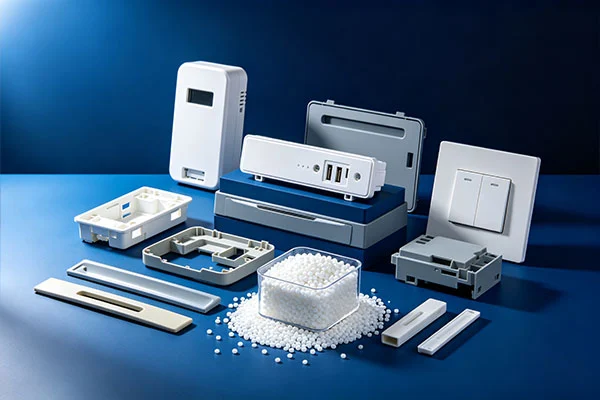
As an engineering plastics sourcing partner, Nianjing supplies Glass Fiber Reinforced PBT for applications requiring enhanced stiffness, mechanical strength, thermal performance, and dimensional stability. Choosing the right reinforced PBT grade helps manufacturers balance component performance, injection molding efficiency, and long-term reliability.
Glass Fiber Reinforced PBT is an engineering thermoplastic made by combining polybutylene terephthalate (PBT) resin with glass fiber reinforcement. Compared with unfilled PBT, reinforced grades generally offer greater rigidity, improved tensile and flexural performance, better creep resistance, and enhanced dimensional stability. These characteristics make the material suitable for automotive components, electrical connectors, electronic housings, precision molded parts, and industrial equipment. However, performance depends on glass fiber content, resin formulation, processing conditions, and the operating environment. This guide explains the material's composition, key advantages, common applications, grade selection criteria, and injection molding considerations to help engineers and purchasing teams make informed sourcing decisions.
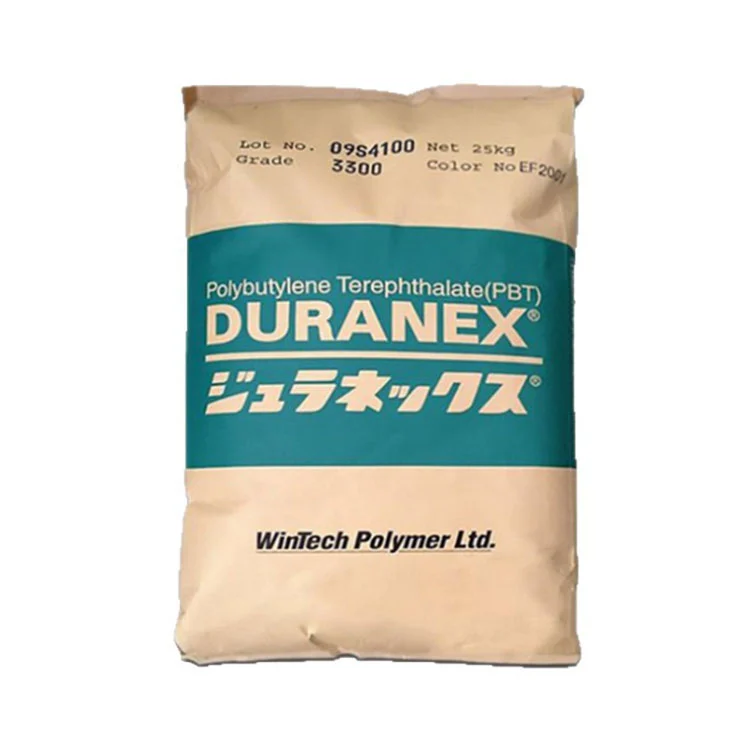
Glass Fiber Reinforced PBT is a modified engineering plastic based on polybutylene terephthalate, a semicrystalline thermoplastic polyester. During compounding, glass fibers are incorporated into the polymer matrix to improve mechanical performance and reduce deformation under load.
Unfilled PBT is already valued for its relatively low moisture absorption, electrical insulation properties, chemical resistance, and suitability for injection molding. Adding glass fibers helps overcome some of its limitations in applications that demand greater stiffness, higher load-bearing capability, or more reliable dimensional control.
The material is commonly identified by its glass fiber content. For example, PBT GF20 generally indicates a grade containing approximately 20% glass fiber, while PBT GF30 typically indicates approximately 30%. The exact designation convention should be verified against the manufacturer's technical documentation.
It is important to understand that glass fiber content alone does not define the complete performance of a compound. Resin chemistry, stabilizers, flame-retardant additives, fiber characteristics, and manufacturing conditions can all affect the final properties.
The PBT resin forms the continuous polymer matrix, while the glass fibers help carry mechanical loads and resist deformation. The effectiveness of this reinforcement depends on fiber distribution, fiber orientation, interfacial bonding, and the quality of the molded structure.
The main reason manufacturers choose Glass Fiber Reinforced PBT is its combination of mechanical strength, thermal performance, electrical insulation, and molding capability. These properties make it suitable for components that must maintain their function under repeated loading or changing environmental conditions.
Glass fiber reinforcement generally increases tensile strength, flexural strength, and flexural modulus. This is especially useful for connectors, brackets, housings, and structural components that must resist bending or maintain precise assembly dimensions.
However, greater stiffness does not automatically mean greater toughness. Highly reinforced grades may exhibit lower elongation and can become more sensitive to impact, notch geometry, or poorly designed weld lines. Engineers should evaluate the complete mechanical property profile rather than tensile strength alone.
Glass fiber reinforcement can improve heat deflection performance, allowing selected grades to retain useful stiffness under elevated-temperature loading. This makes reinforced PBT relevant to automotive electrical systems, appliance components, and industrial equipment.
Heat deflection temperature (HDT) is not the same as the maximum continuous operating temperature. Long-term heat aging, applied stress, chemical exposure, and the required service life must also be considered.
PBT generally absorbs less moisture than several other engineering plastics. Glass fiber reinforcement can further improve dimensional control by reducing molding shrinkage, although shrinkage becomes direction-dependent because the fibers align with the material flow.
This behavior is particularly important for precision components. A suitable grade, balanced mold design, and consistent processing conditions are needed to minimize warpage and dimensional variation.
PBT offers useful electrical insulation characteristics, making reinforced grades suitable for many connectors, switch components, relay housings, and electrical enclosures. Certain formulations also provide good resistance to oils, fuels, and selected industrial chemicals.
Electrical performance, chemical compatibility, and flame retardancy must be confirmed for the exact grade. A standard reinforced compound should not be assumed to meet a specific UL 94 classification or regulatory requirement without supporting documentation.
The appropriate reinforcement level depends on the component's mechanical requirements, geometry, appearance, and manufacturing process. Higher glass fiber content generally improves stiffness, but it can also increase processing sensitivity and complicate surface finishing.
| Material Grade | General Characteristics | Potential Applications | Key Considerations |
|---|---|---|---|
| Unfilled PBT | Good flow, electrical insulation, and chemical resistance | General molded parts and housings | May lack the stiffness required for heavily loaded parts |
| PBT GF10–15 | Moderate reinforcement and improved rigidity | Lightly loaded structural components | Balance of reinforcement and processability |
| PBT GF20–30 | Higher stiffness and strength than unfilled grades | Connectors, brackets, housings, and precision parts | Check shrinkage, warpage, and impact performance |
| PBT Above GF30 | Higher reinforcement and potentially greater rigidity | Specialized components with demanding stiffness requirements | More attention to flow, fiber orientation, and surface quality |
The ranges above are general selection guidelines, not guaranteed performance specifications. Actual results vary by compound formulation and test method. A grade with 20% glass fiber may be more appropriate than a 30% grade if the part requires better impact performance, surface appearance, or mold filling.
Automotive manufacturers use reinforced PBT in selected electrical connectors, sensor housings, ignition components, brackets, and other molded parts. Its stiffness, electrical insulation, and resistance to many automotive fluids make it useful where dimensional reliability matters.
For under-the-hood applications, the selected material should be evaluated against operating temperature, vibration, moisture, chemical exposure, and long-term aging requirements.
Electrical applications include connector bodies, switch components, relay housings, terminal supports, and selected circuit protection components. Reinforced PBT can provide the mechanical rigidity needed to maintain alignment and assembly fit.
When a component is subject to fire-safety requirements, buyers should specify the required flame rating, test specimen thickness, and applicable approval conditions.
Industrial equipment may use reinforced PBT for pump components, mechanical supports, protective housings, and precision molded parts. The material can be suitable where low moisture sensitivity and mechanical stiffness are valuable.
Appliance manufacturers may select reinforced PBT for internal structural components, electrical housings, motor-related parts, and mounting elements. The exact grade should match the component's temperature exposure, chemical contact, and service-life expectations.
Material selection should reflect the actual operating environment rather than a simple ranking of strength or price. Glass Fiber Reinforced PBT is particularly attractive when stiffness, electrical properties, moisture behavior, and injection molding performance must work together.
| Material | Main Advantages | Potential Limitations | Typical Selection Priority |
|---|---|---|---|
| Unfilled PBT | Good electrical properties, chemical resistance, and moldability | Lower stiffness than reinforced grades | Parts with moderate mechanical demands |
| Glass Fiber Reinforced PBT | Higher stiffness, improved load-bearing performance, and dimensional control | Fiber-related anisotropy and possible surface defects | Rigid precision parts and electrical components |
| Glass Fiber Reinforced PA66 | Strong mechanical performance in many demanding applications | Moisture absorption can affect dimensions and properties | Applications requiring a different strength and thermal balance |
| Glass Fiber Reinforced PET | High stiffness and useful dimensional performance in suitable grades | Processing and moisture-control requirements depend on the grade | Applications where PET-specific performance is advantageous |
| Metal | High strength and rigidity for many structural designs | Often heavier and may require more machining or finishing | High-load applications or designs requiring metal properties |
Before replacing an existing material, compare technical data under consistent test conditions. Component geometry, joining methods, fatigue behavior, temperature exposure, and total manufacturing cost may matter as much as the nominal material properties.
Selecting the right Glass Fiber Reinforced PBT grade begins with the part's functional requirements. A higher reinforcement percentage is not automatically the best option, especially when complex geometry, impact resistance, or cosmetic quality is important.
For parts exposed to hot water or humid conditions, a hydrolysis-resistant grade may be worth evaluating. For thin-wall or complex molds, a high-flow formulation may be more suitable. Where dimensional tolerances are demanding, low-warpage grades and mold-flow analysis can help guide material selection.
Glass fiber reinforced PBT is commonly processed by injection molding. Because PBT is moisture-sensitive during melt processing, appropriate resin drying and moisture control are important for maintaining material quality.
Common defects include warpage, sink marks, visible fibers, weld-line weakness, and dimensional variation. These issues should be investigated through systematic trials rather than addressed by changing material specifications alone.
For a new component, a practical qualification process includes initial mold trials, dimensional inspection, mechanical testing where necessary, and verification under representative service conditions.
Reliable sourcing involves more than finding a resin with the correct polymer name. Buyers should confirm grade identity, technical performance, supply availability, and documentation before approving a material for production.
Yuyao Nianjing Import & Export Co., Ltd. supports plastic raw material sourcing and international trade, including PBT and reinforced PBT grades. Buyers can provide an existing material designation or describe the finished component's requirements so that potential sourcing options can be evaluated.
For grade substitutions, technical equivalence should be checked rather than assumed. Compare mechanical properties, heat deflection temperature, shrinkage, hydrolysis resistance, melt flow, and relevant compliance documents. Final approval should be based on the exact grade manufacturer's current data and, where necessary, component-level testing.
Learn more about Glass Fiber Reinforced PBT material options or explore Nianjing's plastic raw material sourcing resources to identify a suitable starting point for your project.
It is used for molded components that require greater stiffness, mechanical strength, dimensional stability, or thermal performance than unfilled PBT can provide. Common examples include automotive electrical components, connectors, electronic housings, appliance parts, and precision industrial components.
PBT GF30 generally refers to polybutylene terephthalate containing approximately 30% glass fiber. It is commonly selected for applications requiring increased rigidity and strength. The exact material properties depend on the formulation, processing conditions, and test methods.
Reinforced PBT grades can offer improved heat deflection performance compared with unfilled PBT. However, the appropriate operating temperature depends on the specific grade, mechanical loading, exposure duration, and environmental conditions. Always check the manufacturer's technical data.
Not necessarily. Two GF30 grades can differ in strength, stiffness, impact resistance, melt flow, shrinkage, hydrolysis resistance, and flame-retardant performance. Review the technical data and qualify the substitute before using it in production.
No. Higher glass fiber content generally increases stiffness, but it may also increase anisotropic shrinkage, surface roughness, and processing sensitivity. The best grade is the one that meets the finished part's complete performance requirements.
Useful information includes the required grade, glass fiber content, application, processing method, mechanical and thermal requirements, color, order quantity, and any compliance requirements. If the exact grade is unknown, a component description and operating conditions can help narrow the options.
Nianjing can review sourcing requirements for specific or equivalent PBT grades. Availability, technical equivalence, and supporting documentation should be confirmed for the selected material before purchase and production approval.
Glass Fiber Reinforced PBT is a versatile engineering thermoplastic for components that need higher stiffness, improved load-bearing performance, useful electrical insulation, and reliable dimensional control. Its performance depends on more than the glass fiber percentage: formulation, processing conditions, component geometry, and the service environment all influence the final result.
For engineers and purchasing teams, the most effective selection strategy is to define the finished component's requirements first, compare verified technical data, and qualify the chosen grade under realistic production and operating conditions. This approach can help reduce material substitution risks, improve molding consistency, and support long-term product reliability.
If you are evaluating Glass Fiber Reinforced PBT for a new design or looking for an alternative to an existing resin, contact us at Nianjing to discuss your grade requirements, application conditions, technical documentation, and sourcing needs. Providing your target specifications and estimated order quantity will help us review suitable material options for your project.