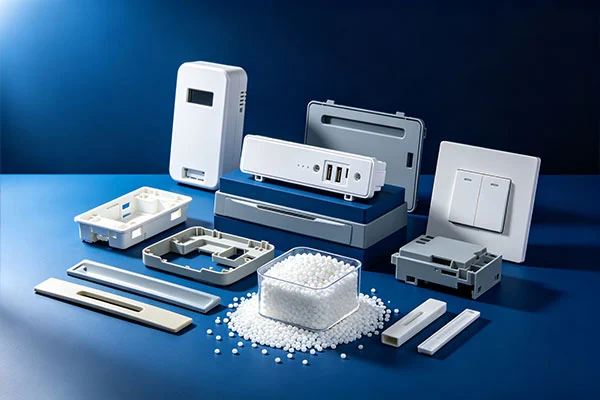
ABS injection molding grades are selected according to the performance and processing requirements of the finished molded part. Depending on the formulation, ABS grades can provide different levels of impact resistance, rigidity, melt flow, heat resistance, surface appearance, flame retardancy, or electroplating performance.
Nianjing supplies sourcing options for specified ABS grades and producers, with material selection based on the application, required properties, quantity, packaging, and delivery requirements.

Different ABS grades are formulated for different processing and end-use requirements. The following classification provides a practical starting point for material selection.
| Grade Type | Main Consideration | Typical Applications |
| General-Purpose ABS | Balance of flow, rigidity, impact resistance, and appearance | Appliance housings, office equipment, consumer products |
| High-Impact ABS | Higher toughness and impact resistance | Automotive components, tool housings, protective parts |
| High-Flow ABS | Easier filling of complex or thin-wall geometries | Large housings, complex molded components |
| Heat-Resistant ABS | Higher resistance to elevated temperatures | Appliance components, automotive interior parts |
| Flame-Retardant ABS | Compliance with specified flammability requirements | Electrical and electronic housings |
| Electroplating ABS | Surface characteristics suitable for plating processes | Automotive trim, grilles, decorative components |
| Transparent / Translucent ABS | Increased light transmission compared with standard grades | Selected transparent molded components |
There is no single set of physical properties that applies to every ABS injection molding grade. When comparing materials, the following parameters are generally more useful than a generic ABS specification.
| Property | Why It Matters |
| Melt Flow Rate (MFR) | Helps evaluate melt flow and filling behavior |
| Impact Strength | Important for parts exposed to impact or mechanical shock |
| Tensile Strength | Indicates tensile mechanical performance |
| Flexural Modulus | Used when stiffness is an important requirement |
| Heat Deflection Temperature (HDT) | Helps evaluate dimensional performance under elevated temperature |
| Vicat Softening Temperature | Indicates softening behavior under heat |
| Mold Shrinkage | Relevant to dimensional accuracy and mold design |
| Density | Useful for material comparison and weight calculations |
| Flame Rating | Required when the finished product has specific flammability requirements |
| Gloss / Surface Characteristics | Important for visible or appearance-sensitive components |
Values should be compared under the same test methods and conditions. The technical data sheet for the specific ABS grade should be used as the final reference.
Several international producers offer ABS product families for injection molding. The following information can be used as a reference when identifying a material by producer and grade.
| Producer | Product Family | Representative Grade | General Positioning |
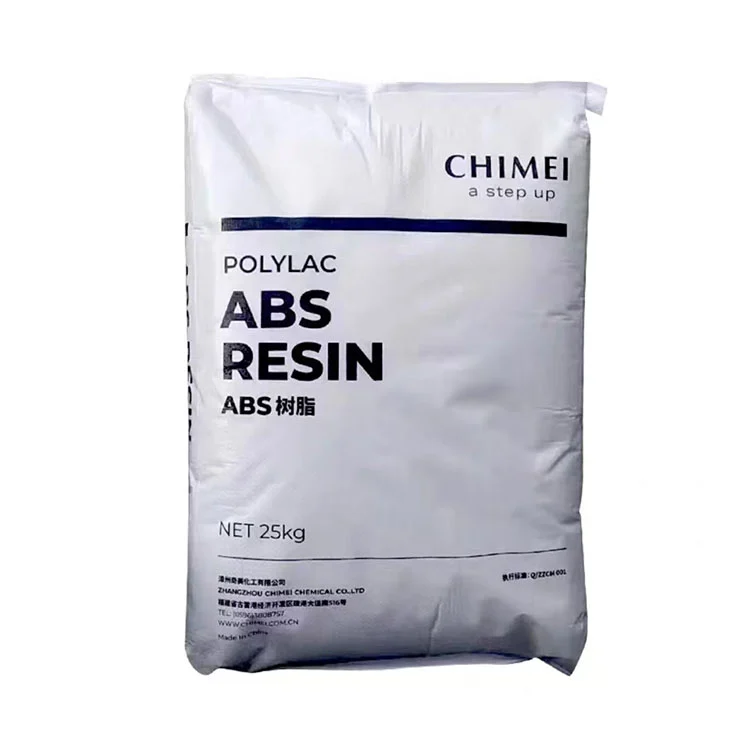
| CHIMEI | POLYLAC® | PA-757 | General-purpose ABS |
| CHIMEI | POLYLAC® | PA-727 | Electroplating grade |
| CHIMEI | POLYLAC® | PA-777D / PA-777E | Heat-resistant grades |
| CHIMEI | POLYLAC® | PA-765 / PA-765A | Flame-retardant grades |
| Taiwan Prosperity | ABS Resin | D-150 | General-purpose ABS |
| Taiwan Prosperity | ABS Resin | D-650 | Higher-flow applications |
| Taiwan Prosperity | ABS Resin | D-450 | Heat-resistant applications |
| Toray | TOYOLAC® | T700 | General-purpose ABS |
| Toray | TOYOLAC® | T100 | High-impact ABS |
| Toray | TOYOLAC® | 440Y / 450Y | Heat-resistant grades |
| Toray | TOYOLAC® | 844V / 855VG20 | Flame-retardant grades |
| INEOS Styrolution | LUSTRAN® | 1146 | General-purpose / automotive-related applications |
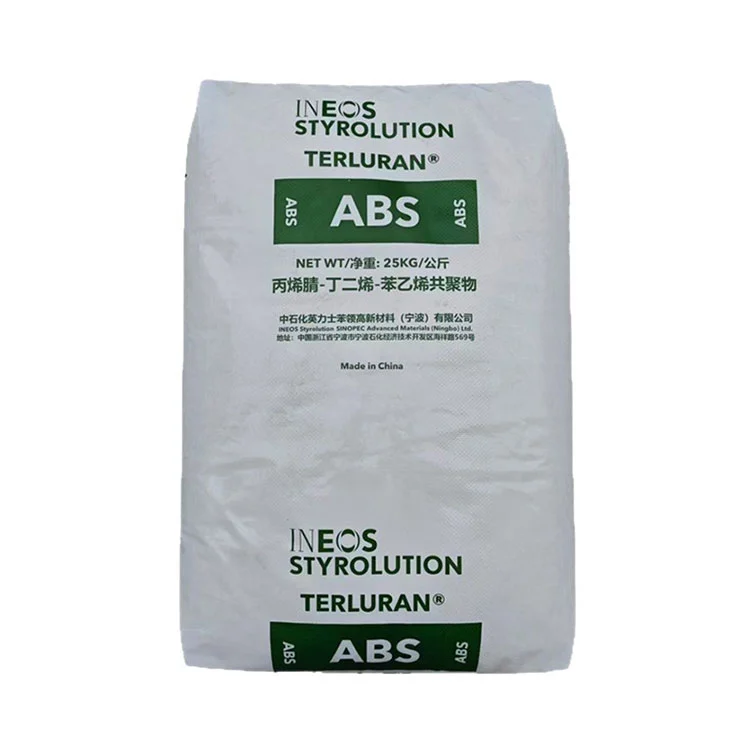
| INEOS Styrolution | NOVODUR® / TERLURAN® | Series dependent | General and specialty ABS |
Note: In addition to the aforementioned brands, LG Chem and SABIC are also major global ABS producers. Subtle differences in the physical properties of various grades ultimately determine their most suitable applications.
The most suitable grade depends on the requirements of the finished component. A practical selection process starts with the following factors.
Determine whether the part primarily needs impact resistance, stiffness, dimensional stability, or a balance of these properties.
For example, a protective housing may place greater emphasis on impact performance, while a structural enclosure may require greater rigidity and dimensional control.
Melt flow becomes particularly relevant for:
MFR should be compared together with the actual mold design rather than treated as an independent indicator of molding quality.
For components exposed to heat, compare:
The selected material should meet the actual service conditions rather than relying only on a nominal heat-resistance classification.
For visible components, evaluate surface finish, gloss, colorability, weld-line appearance, and molding behavior.
A material that performs well mechanically may not necessarily provide the desired surface appearance in a particular mold.
Additional material requirements may include:
These requirements should be confirmed at the grade level.
ABS is processed by injection molding across a range of processing conditions, but there is no single temperature or pressure setting suitable for every grade.
ABS can absorb moisture during storage. Moisture in the material may contribute to silver streaks, bubbles, surface defects, and processing instability.
Drying conditions should follow the producer's recommendation. Many ABS grades are dried at approximately 80–90°C for several hours, but the required time and temperature depend on the grade, initial moisture content, dryer performance, and storage conditions.
Many ABS grades are processed within an approximate melt-temperature range of 200–250°C. The recommended range should be taken from the specific grade's processing guide.
Excessive temperature or prolonged residence time can increase the risk of discoloration or thermal degradation.
Mold temperature, injection speed, injection pressure, holding pressure, and cooling time should be adjusted according to:
Uniform wall thickness, suitable venting, and controlled cooling can help reduce common molding problems such as warpage, weld-line defects, and residual stress.
ABS injection molding grades are used across several industries, but the specific grade should always be matched to the requirements of the finished component.
Housings, covers, enclosures, and control components may use ABS where a combination of rigidity, impact resistance, processing performance, and appearance is required. Flame-retardant grades are used when the required flammability specification applies.
Selected grades are used for automotive interior components, trim parts, housings, and other molded components. Material selection depends on mechanical, thermal, appearance, and regulatory requirements.
ABS can be used for appliance housings, covers, control components, and other molded parts. Heat resistance and surface appearance may become more important for components exposed to elevated temperatures or visible surfaces.
ABS is also used for tool housings, office equipment, consumer electronic enclosures, toys, and various industrial molded components.
Dedicated electroplating grades are used where the molded ABS substrate will undergo a plating process. These materials are formulated to provide surface characteristics that support the required plating process and coating adhesion.
ABS and PC/ABS are both used for injection-molded components, but they serve different material requirements.
| Consideration | ABS | PC/ABS |
| Material Structure | ABS polymer | PC and ABS blend |
| Processing | Generally straightforward injection molding | Grade dependent |
| Impact Performance | Grade dependent | Generally higher in selected grades |
| Heat Resistance | Grade dependent | Generally higher in selected grades |
| Surface Appearance | Available in many appearance grades | Grade dependent |
| Typical Positioning | General and specialty molded parts | Applications requiring a higher performance balance |
The choice should be based on the actual technical requirements and cost constraints of the component. PC/ABS should not be considered an automatic replacement for ABS.
Nianjing handles plastic raw material sourcing for customers requiring specified ABS producers, grades, quantities, and delivery arrangements.
For a more accurate material search, the following information is useful:
| Requirement | Information to Provide |
| Material | ABS |
| Processing | Injection molding |
| Producer | Preferred producer, if specified |
| Grade | Exact grade number, if known |
| Application | Product or component being molded |
| Key Property | Impact, flow, rigidity, heat resistance, flame retardancy, etc. |
| Quantity | Required volume |
| Packaging | Required packaging |
| Destination | Delivery country or region |
If the original grade is known, providing the exact producer and grade number is preferable to describing the material only as "ABS." It allows the sourcing process to focus on the correct specification.
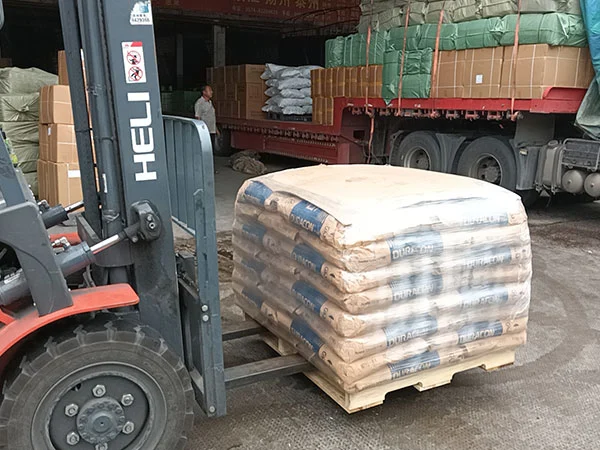
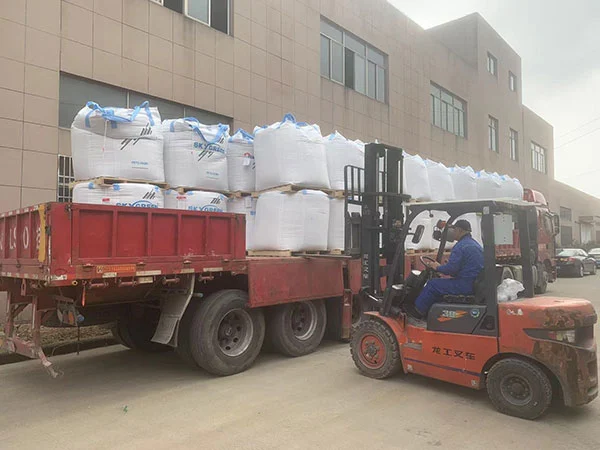
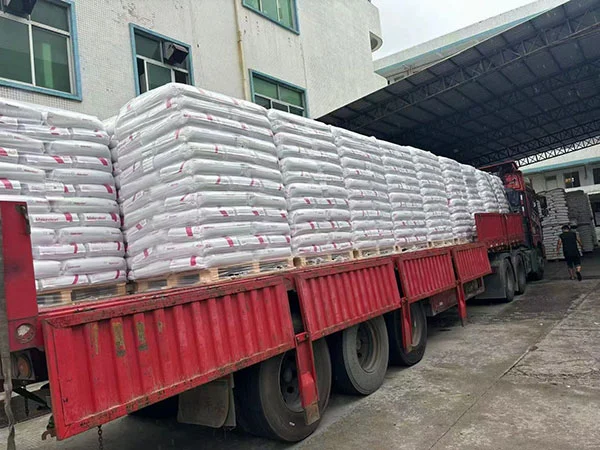
Packaging and delivery arrangements depend on the selected producer, grade, quantity, and destination.
Before an order is confirmed, the following details should be checked:
Actual packaging and logistics conditions should be confirmed for each order.

It is ABS resin formulated and specified for injection molding applications. Different grades can have substantially different flow, impact, heat resistance, surface, and flame-retardant properties.
The answer depends on the finished part. General-purpose grades may be suitable for balanced requirements, while high-impact, high-flow, heat-resistant, flame-retardant, or electroplating grades should be considered when a specific performance requirement exists.
ABS can absorb moisture, particularly during storage in humid conditions. Drying is commonly recommended before molding, with the exact temperature and time determined by the selected grade and producer's processing instructions.
Many ABS grades are processed at melt temperatures around 200–250°C, but this is only a general reference. The producer's recommended processing range for the exact grade should be used for production.
High-impact grades are considered when the molded component requires greater resistance to mechanical impact or drop damage. The required impact performance should be verified against the actual product conditions.
Standard ABS should not automatically be assumed to be suitable for electroplating. Dedicated electroplating grades are formulated for this process and should be selected according to the plating system and required adhesion performance.
Standard ABS has limited long-term UV and weather resistance. For prolonged outdoor exposure, a weather-resistant ABS grade or an alternative material such as ASA may be more appropriate.
Not on a general basis. PC/ABS can provide different combinations of impact and thermal performance, but it also has different processing and cost characteristics. The two materials should be compared according to the finished component's requirements.
Nianjing can check sourcing options for specified producers and grades according to current supply conditions. Providing the exact producer and grade number makes the sourcing request more precise.
Not automatically. Similar grades can differ in MFR, impact strength, rigidity, heat resistance, shrinkage, surface characteristics, and processing conditions. Any substitution should be evaluated using the technical data of both grades.
Address
China Plastics City, Yuyao City, Ningbo City, Zhejiang Province, China
Tel
Looking for a specific plastic material, brand, grade or quantity? Send your requirements to Nianjing for sourcing and availability confirmation.
Please include the material name, manufacturer or brand, grade, quantity, application and delivery requirements when available. If you are unsure about the grade, simply describe your application and requirements.
Nianjing will review your inquiry and check suitable sourcing options based on your requirements.