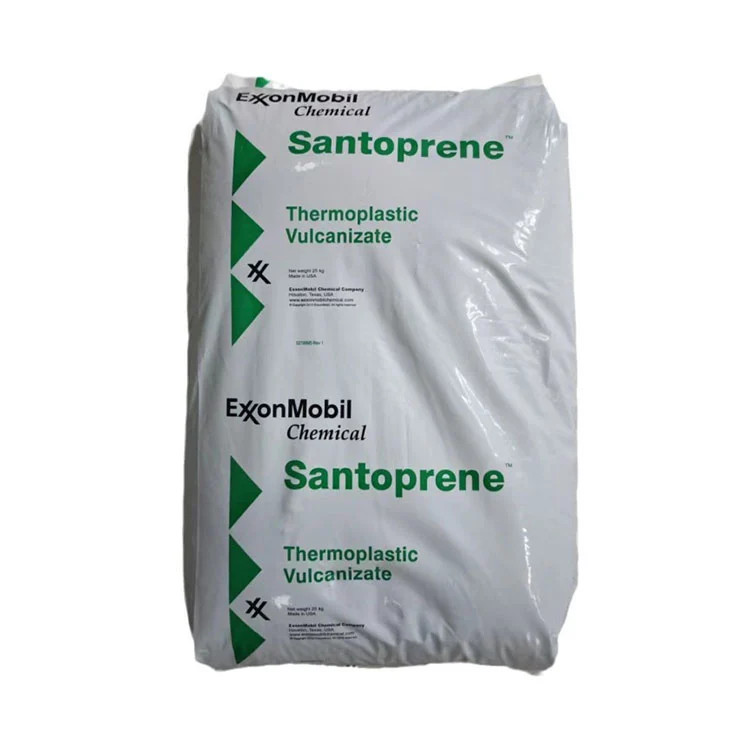
When food-contact components must combine flexibility, durability, and reliable hygiene performance, material selection becomes a critical engineering decision. Nianjing provides material solutions for manufacturers exploring Food-Grade TPV, a thermoplastic vulcanizate designed for suitable food-contact applications where rubber-like elasticity and efficient thermoplastic processing are both important. By evaluating regulatory compliance, chemical resistance, mechanical performance, and processing requirements, manufacturers can select an appropriate grade for their products and production processes.
Food-grade thermoplastic vulcanizate (TPV) combines the elastic properties of rubber with the processing advantages of thermoplastics. Depending on its formulation and verified food-contact compliance, it can be used in sealing rings, gaskets, kitchenware components, bottle closures, and other products that may contact food or beverages. This guide explains how food-contact TPV works, its main advantages, common applications, material selection criteria, and processing considerations. It also outlines the documentation buyers should request before approving a material for commercial production.
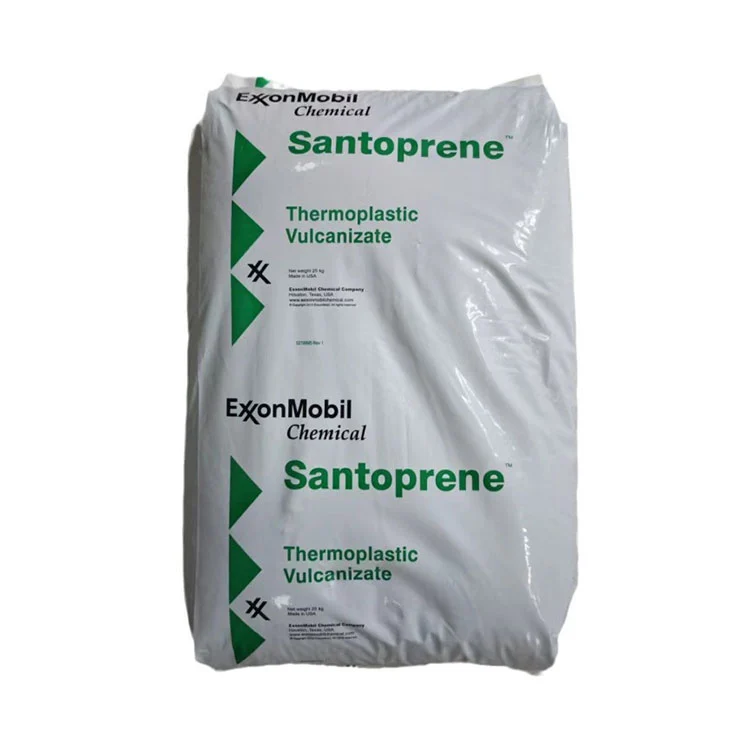
TPV stands for thermoplastic vulcanizate, a type of thermoplastic elastomer commonly produced by dynamically vulcanizing a rubber phase within a thermoplastic matrix. Many commercial TPV formulations use ethylene propylene diene monomer (EPDM) rubber and polypropylene (PP), although compositions vary according to the intended application.
The rubber phase provides flexibility and elastic recovery, while the thermoplastic phase supports conventional manufacturing processes such as injection molding and extrusion. This combination makes TPV a practical candidate for components that require repeated deformation without the processing requirements associated with conventional vulcanized rubber.
The term food-grade refers to a material formulation intended to meet the applicable requirements for its specified food-contact use. It does not automatically mean that every TPV compound is suitable for direct food contact. Compliance depends on the formulation, manufacturing controls, intended food type, temperature, contact duration, and applicable regulations.
Before purchasing a material, buyers should review the supplier's technical data sheet, food-contact declaration, and supporting test reports. For further background, consult this overview of Food-Grade TPV material.
TPV can provide the flexibility needed for seals, grips, cushioning components, and flexible closures. Appropriate grades can recover their shape after compression or bending, helping components maintain functional contact and fit during repeated use. Actual recovery performance depends on hardness, formulation, temperature, and loading conditions.
Many TPV compounds offer useful resistance to water, weathering, and selected chemicals. These characteristics can benefit food-processing accessories and household products exposed to routine washing or humid environments. However, resistance to oils, fats, cleaning agents, and acidic foods varies by formulation. Compatibility should be verified under the actual operating conditions.
Unlike conventional rubber that generally requires a separate vulcanization stage after shaping, TPV can be processed using suitable thermoplastic equipment. Injection molding and extrusion are common options, potentially supporting consistent production and efficient manufacturing workflows.
Clean production scrap from some TPV grades may be suitable for controlled reprocessing, subject to the manufacturer's recommendations and the end product's requirements. This can help reduce manufacturing waste. Reprocessed material must not be assumed suitable for food-contact applications without confirming regulatory compliance and performance.
Food-contact TPV can be considered for applications where flexibility, sealing performance, and suitable regulatory compliance are required. The final choice must match the component's function and the conditions in which it will be used.
Not every application requires direct food-contact approval. For example, an external handle may have different compliance requirements from a gasket that touches food or a beverage. Identifying the actual contact surface helps buyers avoid both unnecessary material costs and compliance gaps.
TPV is one option among several elastomeric materials used in food-related products. The best choice depends on temperature, chemical exposure, flexibility, cost, processing equipment, and the applicable food-contact regulations.
| Material | Main Characteristics | Potential Advantages | Key Considerations |
|---|---|---|---|
| Food-grade TPV | Rubber-like elasticity with thermoplastic processability | Suitable for flexible molded parts and seals | Verify the exact grade's food-contact compliance and chemical resistance |
| Food-contact silicone | Flexible elastomer with grades designed for a broad range of temperatures | Useful for selected demanding temperature applications | Cost, mechanical strength, and processing requirements vary |
| Food-contact EPDM rubber | Elastomer with useful water and weather resistance | Suitable for many sealing applications | Conventional grades generally require rubber vulcanization |
| Food-contact TPU | Thermoplastic polyurethane with grades offering abrasion resistance | Useful where toughness and wear resistance matter | Hydrolysis resistance and food-contact suitability are grade-dependent |
| Food-contact PP | Rigid thermoplastic used in containers and closures | Lightweight, moldable, and suitable for many rigid components | Does not provide the same rubber-like elasticity as TPV |
This comparison is qualitative rather than a universal performance ranking. Always compare the technical data sheets and compliance documents for the specific grades under consideration.
Choosing a material based on the label alone is insufficient. Procurement teams, product designers, and quality engineers should assess the complete application before approving a compound for production.
Identify whether the component contacts food directly or indirectly. Record the food types involved, including aqueous, acidic, alcoholic, or fatty foods, as well as the expected contact time and temperature. These factors influence which regulatory requirements and migration tests apply.
Determine the required Shore hardness, tensile strength, elongation, compression set, and dimensional stability. A soft gasket may require different properties from a rigidly supported grip or a flexible closure. Request measured values and the relevant test methods rather than relying on general product descriptions.
Discuss the intended injection molding or extrusion process with the supplier. Important factors include melt flow behavior, processing temperature, mold design, cycle time, shrinkage, and compatibility with any rigid substrate used for overmolding.
Ask the supplier to provide the documentation appropriate to the destination market and intended use. Depending on the application, this may include:
For US applications, check the applicable provisions of the US FDA food-contact regulations in 21 CFR. For European markets, review the applicable framework, including Regulation (EC) No 1935/2004, along with relevant material-specific and national requirements. A general claim of FDA or EU compliance should not replace verification of the specific formulation and intended conditions of use.
Even a suitable raw material can produce inconsistent components if processing conditions are poorly controlled. Manufacturers should establish a repeatable process and validate the finished part rather than assuming that the resin's published properties automatically translate into the same performance in every design.
For critical applications, conduct pilot production and performance testing under representative service conditions before moving to full-scale manufacturing. If a component is repeatedly exposed to detergents, heat, oils, or mechanical compression, include those conditions in the validation plan.
No. Only grades that meet the applicable requirements for their intended food-contact conditions should be used. Confirm the exact formulation, compliance declaration, and supporting test evidence before approving a material.
TPE, or thermoplastic elastomer, is a broad category of materials that combine elastic behavior with thermoplastic processing. TPV is one type of TPE, typically featuring a dynamically vulcanized rubber phase dispersed in a thermoplastic matrix.
Potentially, but suitability depends on the specific grade, contact temperature, duration, food type, and applicable regulations. Obtain supporting evidence for the actual service conditions rather than assuming that every food-contact grade is suitable for hot-fill or high-temperature use.
Many TPV grades support injection molding and extrusion. The correct process, temperature settings, tooling design, and operating parameters depend on the material formulation and the component's geometry.
Request a grade-specific compliance declaration, technical data sheet, and relevant migration or extraction reports. Check that the documents identify the applicable regulatory framework and cover the intended food types, temperatures, and contact durations.
Some TPV materials can be mechanically reprocessed under controlled conditions, particularly clean manufacturing scrap. However, recyclability depends on the formulation and processing history, and reprocessed material must independently meet the requirements for its intended application.
Food-grade TPV offers manufacturers a useful combination of rubber-like flexibility, thermoplastic processability, and application-specific performance. Its suitability for food-contact components, however, depends on more than its material category. Regulatory documentation, mechanical properties, chemical compatibility, processing conditions, and finished-part validation must all align with the intended use.
Nianjing supports buyers evaluating material options for their product development and manufacturing needs. If you are comparing grades, planning a new food-contact component, or seeking a suitable material for molding or extrusion, contact us to discuss your application requirements, request relevant technical documentation, and identify a Food-Grade TPV solution that fits your product specifications.