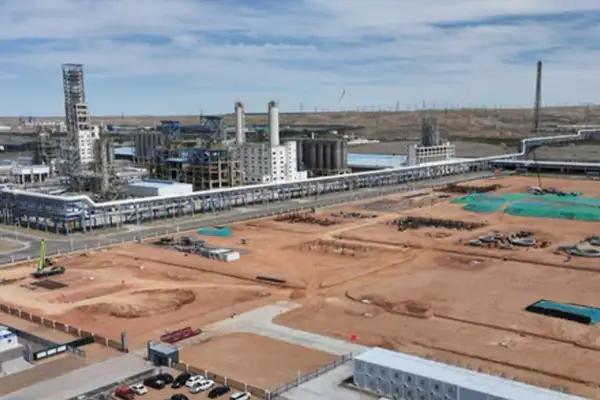
China has achieved a major breakthrough in the localization of critical equipment for high-pressure EVA production. Recently, the 100,000-ton/year EVA project of China Energy Investment Corporation's Ningxia Coal Industry Co., Ltd. completed the first domestic manufacturing and field application of high-pressure piping for the ExxonMobil stirred-autoclave EVA process. This achievement breaks the long-standing overseas monopoly on ultra-high-pressure piping manufacturing and installation technology, supporting the project's scheduled completion and commissioning while advancing the coal chemical industry toward higher-value production.
The plant adopts the ExxonMobil stirred-autoclave process, with a design pressure of up to 250 MPa. Such extreme operating conditions impose stringent requirements on piping materials, manufacturing precision and installation procedures. Before this breakthrough, China lacked mature manufacturing and installation standards for this type of piping, while only two or three suppliers worldwide had the capability to manufacture it.
The project makes use of surplus ethylene and utility resources from Ningxia Coal's Olefins Division II. Its EVA resin products can achieve a vinyl acetate (VA) content of up to 33%, making them suitable for high-end applications such as solar encapsulation films, cable compounds and hot-melt adhesives.
The high-pressure piping used in the ExxonMobil stirred-autoclave EVA process is not ordinary industrial pressure piping. It is a critical pressure-bearing component in an ultra-high-pressure polymerization system. The main technical challenges lie in four areas: material performance, manufacturing processes, inspection and process compatibility.
High-pressure piping in stirred-autoclave EVA polymerization systems typically operates at pressures of 150–200 MPa and temperatures of 150–250°C. It conveys mixtures of ethylene and vinyl acetate (VA) monomers, which are flammable and explosive, while also being exposed to pressure and temperature fluctuations during the reaction process. These conditions create a demanding operating environment involving ultra-high pressure, hazardous media and cyclic loading.
Consequently, the piping must meet exceptionally stringent requirements for strength, toughness, fatigue resistance, corrosion resistance and sealing integrity—well beyond those of conventional pressure piping. Material defects or welding imperfections could lead to ultra-high-pressure leakage, explosions or other serious safety incidents.
Material Barrier: The piping requires low-carbon, microalloyed high-strength steel with stringent controls over steel purity, non-metallic inclusions and microstructural uniformity after heat treatment. Before domestic manufacturing capabilities advanced, inconsistent batch quality in steel used for ultra-high-pressure piping contributed to long-term reliance on imported specialty steel pipes.
Manufacturing Barrier: Forging, rolling and overall heat treatment of thick-walled pipes involve complex processes. Forming special-shaped components, including elbows, reducers and tees, presents additional challenges. Welding procedures and post-weld heat treatment must be strictly controlled to ensure that welded joints achieve strength comparable to the base material while minimizing residual stress.
Inspection Barrier: The piping requires 100% nondestructive testing, including ultrasonic testing, radiographic testing and magnetic particle testing, together with hardness testing. It must also pass ultra-high-pressure hydrostatic tests and fatigue cycling tests to verify its performance under long-term operating conditions. These requirements go beyond those typically applied to conventional pressure piping under general GB/T standards.
Process Compatibility Barrier: The ExxonMobil stirred-autoclave process package specifies dedicated piping dimensions, pressure ratings, connection standards and material requirements. Localization therefore involves much more than manufacturing thick-walled pipes. The piping must match the process parameters and obtain the necessary engineering approval from the process licensor to support stable operation of the polymerization system.
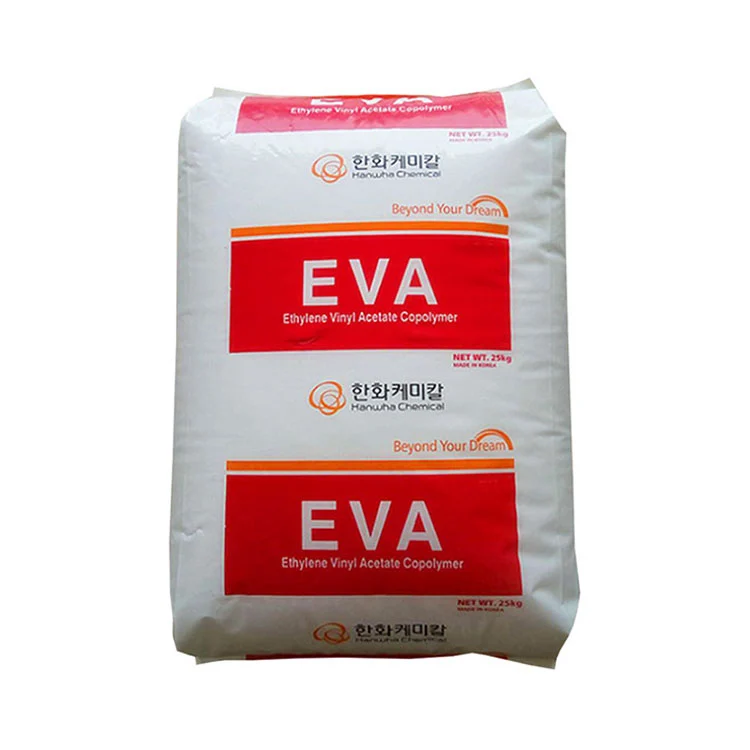
The development of high-pressure EVA production technology is closely related to the supply of specialized polymer materials for downstream industries. EVA properties vary with VA content, melt flow rate and grade, influencing its suitability for film production, cable compounds, hot-melt adhesives and other applications. For an overview of material characteristics and grade selection, see Nianjing's EVA Resin product page.
As a plastic raw material sourcing company, Nianjing covers EVA alongside other materials in its elastomer materials range. Material selection and sourcing depend on the intended application, processing method, required specifications and grade availability.