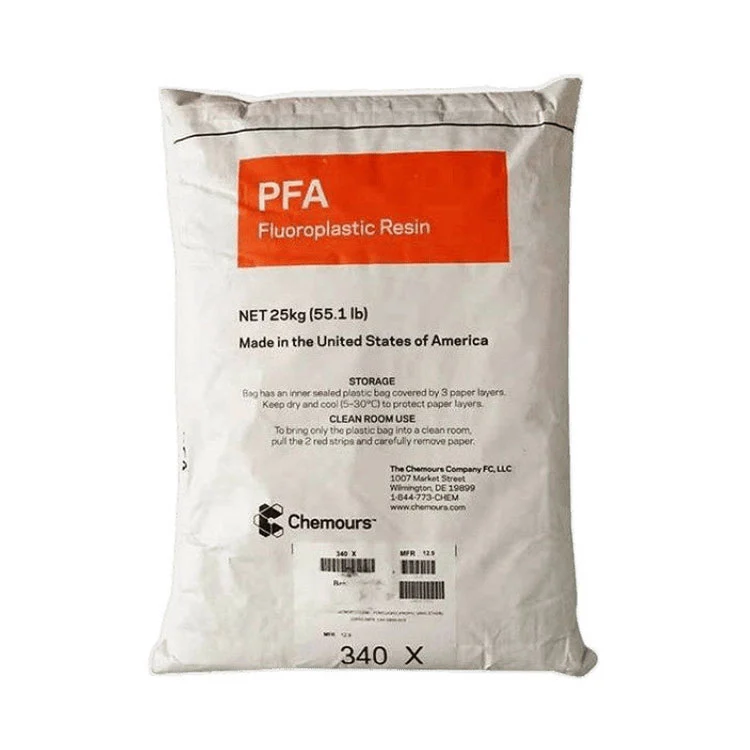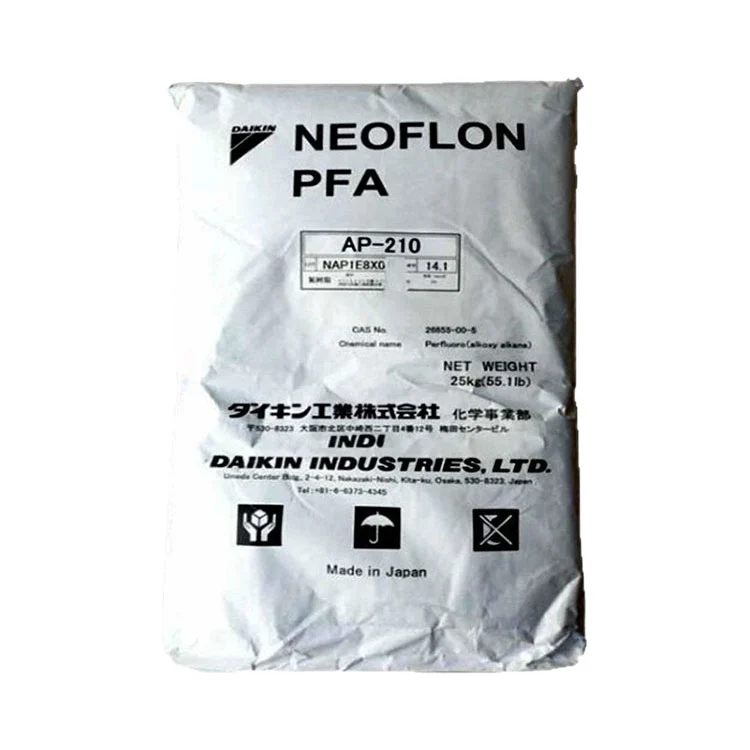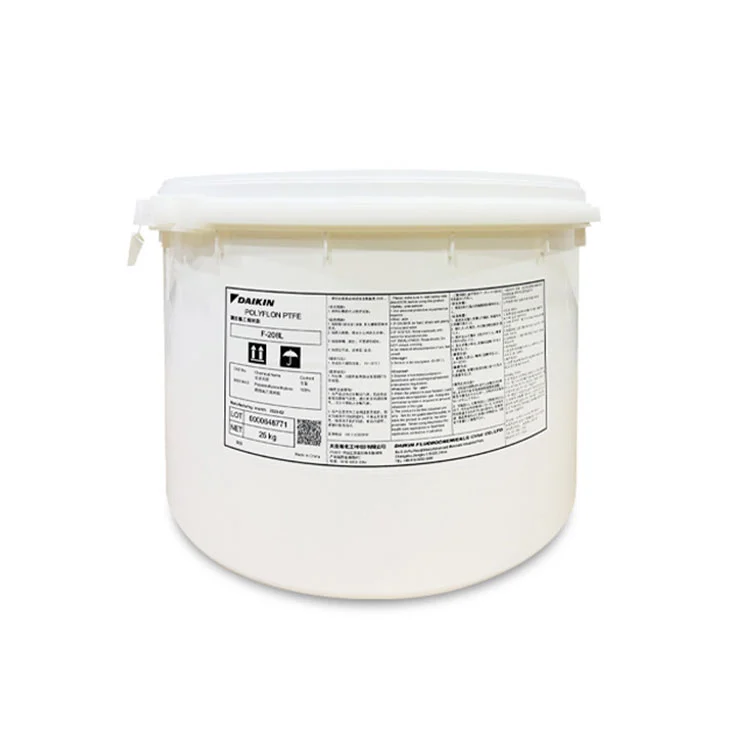
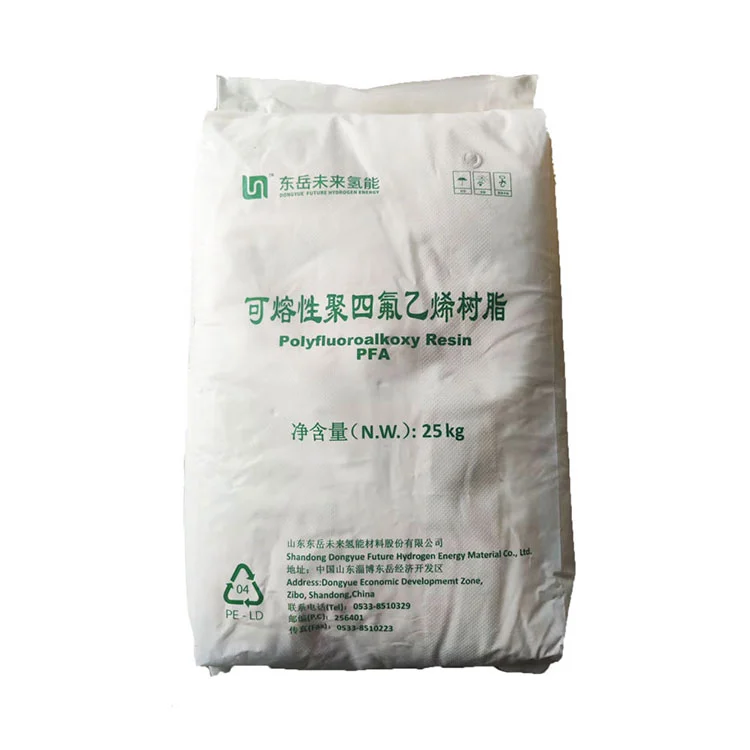
Low MFR PFA (1–5 g/10 min) covers PFA grades with an MFR of approximately 1–5 g/10 min, typically selected where relatively high melt viscosity is required for a specific processing method or product design. Compared with higher-flow grades, these materials can provide a different balance of melt strength, mechanical performance, creep resistance and processing behavior, depending on the polymer structure and grade formulation.
MFR is only one part of PFA material selection. The manufacturer grade, MFR test temperature and load, processing method, product geometry and service environment all affect whether a particular resin is suitable for an application.
Nianjing supports PFA resin sourcing by manufacturer, grade, MFR range, processing method, application and quantity. Current TDS, SDS, COA and other available technical documentation can be requested for grade verification before procurement.


Melt flow rate is one of the main parameters used to compare the flow behavior of PFA grades. A lower MFR generally indicates higher melt viscosity under the stated test condition, which can affect melt strength, forming behavior and processing requirements.
MFR should always be considered together with the test temperature and load. Values from different manufacturers or product families are not directly comparable when the test conditions differ.
PFA grades within the 1–5 g/10 min range generally have lower flow than higher-MFR grades. Their relatively high melt viscosity can be useful where controlled melt behavior, dimensional retention or sufficient melt strength is required during forming.
The same characteristic can make processing more demanding. Equipment configuration, die design, mold conditions, residence time and production speed therefore need to match the selected grade and finished product.
PFA combines chemical resistance, thermal performance and electrical insulation properties. Within a manufacturer's product family, some lower-flow grades are selected for applications requiring higher melt strength or specific mechanical performance.
Creep and deformation resistance are important for components exposed to sustained mechanical loads or elevated temperatures. These properties are best assessed from the manufacturer's creep, tensile, compression or dimensional-stability data for the selected grade.
PFA provides broad resistance to many aggressive chemicals, but long-term suitability depends on the chemical medium, concentration, temperature, exposure time and mechanical stress. For demanding chemical-service components, compatibility should be evaluated for the selected grade and actual operating conditions.
Certain PFA grades are developed for applications where low extractables and contamination control are important, including selected semiconductor, analytical and pharmaceutical processing systems.
High-purity performance is grade-specific. A standard PFA resin should not automatically be described as semiconductor-grade or ultra-high-purity material. Where purity is critical, extractables, ionic contamination, metallic impurities and supporting test documentation should be treated as separate selection criteria.
MFR should not be used as a substitute for a high-purity specification.
The following parameters are useful when comparing Low MFR PFA grades:
| Property | What to Check | Why It Matters |
| MFR | Value and test temperature/load | Indicates melt-flow behavior and supports grade comparison |
| Melt viscosity | Manufacturer data or rheological information | Relevant to processing and melt strength |
| Density | Current grade TDS | Supports material comparison and weight calculation |
| Tensile strength | Current TDS test data | Helps evaluate mechanical performance |
| Elongation | Current TDS test data | Relevant to flexibility and deformation |
| Creep performance | Grade-specific test data | Important for long-term mechanical loading |
| Thermal properties | Service and processing data | Supports temperature selection |
| Chemical resistance | Actual medium and service conditions | Helps determine material suitability |
| Purity | Extractables, ionic or metallic data where applicable | Important for high-purity applications |
| Electrical properties | Dielectric and insulation data where required | Relevant to electrical components |
| Processing method | Extrusion, compression molding, transfer molding or other | Helps identify an appropriate grade |
Important: PFA values should be taken from the current technical documentation of the selected grade. An MFR value is meaningful only when its test temperature and load are also known.
Several PFA product families include grades with MFR values within or close to the 1–5 g/10 min range. The following examples are provided as sourcing references rather than as a technical equivalence list.
| Manufacturer | Representative Grade | Indicative MFR Range* | General Positioning |
| Chemours | Teflon™ PFA 350 | Around 2 g/10 min | High-viscosity PFA for selected molded and extruded applications |
| Chemours | Teflon™ PFA 451HP | Around 2 g/10 min | High-purity option for applications requiring controlled extractables |
| Solvay | Hyflon® PFA P125 | 1.5–3.0 g/10 min | High-viscosity grade for selected tubing and molding applications |
| Solvay | Hyflon® PFA P120/P120X | 2.5–5.0 g/10 min | High-viscosity grades for selected extrusion and molding applications |
| Solvay | Hyflon® PFA M620 | Around 2–5 g/10 min | High-viscosity grade for selected processing routes |
Indicative values should be checked against the current manufacturer's TDS and stated MFR test condition before technical comparison or procurement.
Product availability, specifications and application recommendations may vary by market and product revision. Nianjing can verify the requested grade and available technical documentation before supply.
The appropriate MFR depends strongly on the intended manufacturing process and finished product.
For PFA tubing, profiles, liners and other continuous products, melt viscosity can affect extrusion stability, die pressure, surface quality and dimensional control.
A lower-MFR grade may be suitable for certain products, but the final choice also depends on tube diameter, wall thickness, extrusion equipment and production speed. Processing conditions should follow the manufacturer's recommendations rather than a fixed temperature or screw-speed setting applied across different grades.
Low-flow PFA grades can be considered for compression or transfer molding where controlled melt movement and final part geometry are important.
Molding temperature, pressure, heating cycle and cooling conditions vary with the grade and mold design. Current manufacturer processing guidelines should be used when establishing production parameters.
Injection molding requires sufficient flow for the mold geometry and machine capability. Some low-MFR PFA grades are suitable for injection molding, while others are more appropriate for extrusion or compression-based processes.
For complex or thin-wall parts, MFR should be considered together with flow length, wall thickness, mold design and machine capability.
Low-MFR PFA can be considered where fluoropolymer chemical resistance, thermal performance and controlled melt behavior are required.
Selected grades may be used for valve components, pump components, linings, tubing, seals and other corrosion-resistant parts. Material selection depends on the chemical medium, concentration, temperature and mechanical loading.
Selected high-purity PFA grades are used for chemical delivery tubing, fittings, containers, valves and other fluid-handling components where contamination control is important.
For these applications, purity documentation needs to be reviewed together with the material grade rather than inferred from MFR or the PFA designation alone.
PFA's electrical insulation properties support its use in selected wire insulation, cable components and electrical parts exposed to demanding temperatures or chemical environments.
Dielectric requirements, temperature exposure, flexibility and processing conditions vary by grade and application.
Selected PFA grades can also be considered for corrosion-resistant linings, seals, gaskets and other industrial components. The material needs to be matched to the forming process and service conditions.
For procurement, MFR should be treated as one part of the specification rather than the only selection criterion.
| Requirement | Information to Confirm |
| Manufacturer | Preferred brand or approved supplier |
| Grade | Existing grade number or required performance level |
| MFR | Required range and test condition |
| Processing | Extrusion, compression molding, transfer molding or injection molding |
| Product form | Tube, liner, fitting, seal, film, cable component or molded part |
| Service temperature | Normal and peak operating temperature |
| Chemical exposure | Chemical type, concentration and exposure conditions |
| Mechanical requirements | Tensile, elongation, creep or dimensional stability |
| Purity requirements | Extractables, ionic or metallic contamination where applicable |
| Electrical requirements | Insulation or dielectric specifications where applicable |
| Documentation | TDS, SDS, COA and relevant test reports |
| Quantity | Trial requirement and regular order volume |
If the final application is already defined, providing the target product, processing method and existing reference grade is usually more useful than specifying MFR alone.
Nianjing supports both grade-based sourcing and specification-based sourcing. For an existing grade, the manufacturer and current TDS provide a practical starting point. For a new material requirement, the application, MFR range, processing method, service conditions and quantity can be used to identify potential options.
Before procurement, the selected grade needs to match the current TDS and any application-specific documentation. For high-purity, electrical or chemical-service applications, the relevant technical and compliance criteria should be established before material approval.
It defines the MFR range used for this product category. A lower MFR generally corresponds to higher melt viscosity under the specified test condition. Its practical significance depends on the test temperature, load and manufacturer's test method.
No. Lower MFR can be useful where higher melt viscosity or melt strength is required, but it can also make processing more demanding. The appropriate value depends on the product geometry, processing equipment and required performance.
Yes. Selected low-MFR PFA grades are designed for extrusion applications such as tubing, profiles and other continuous products. The grade needs to match the extrusion equipment, product dimensions and production conditions.
Some high-purity PFA grades with suitable MFR characteristics are used in semiconductor fluid-handling systems. However, MFR alone does not establish semiconductor suitability. Purity, extractables, metallic or ionic contamination and the manufacturer's application data are also relevant.
Not necessarily. Two grades with similar MFR values can differ in purity, molecular structure, additives, mechanical properties, processing behavior and application specifications. Substitution therefore needs to be evaluated against the complete technical specification rather than MFR alone.
Address
China Plastics City, Yuyao City, Ningbo City, Zhejiang Province, China
Tel
Looking for a specific plastic material, brand, grade or quantity? Send your requirements to Nianjing for sourcing and availability confirmation.
Please include the material name, manufacturer or brand, grade, quantity, application and delivery requirements when available. If you are unsure about the grade, simply describe your application and requirements.
Nianjing will review your inquiry and check suitable sourcing options based on your requirements.