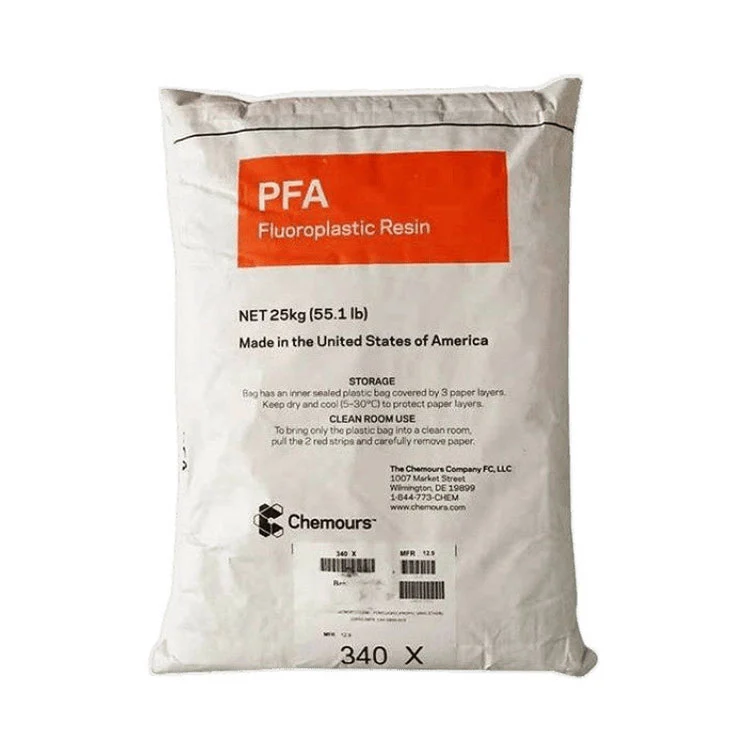
High MFR PFA (20–40+ g/10 min) refers to melt-processable PFA grades with relatively high melt flow under specified test conditions. These grades may be considered when a manufacturing process involves thin sections, small cavities, narrow extrusion passages or other features where melt-flow behavior affects processing.
Nianjing can source PFA materials according to MFR, manufacturer, grade, processing method, application, purity requirements and required quantity. For existing materials, a manufacturer grade number and current TDS provide a useful starting point for technical comparison and sourcing.
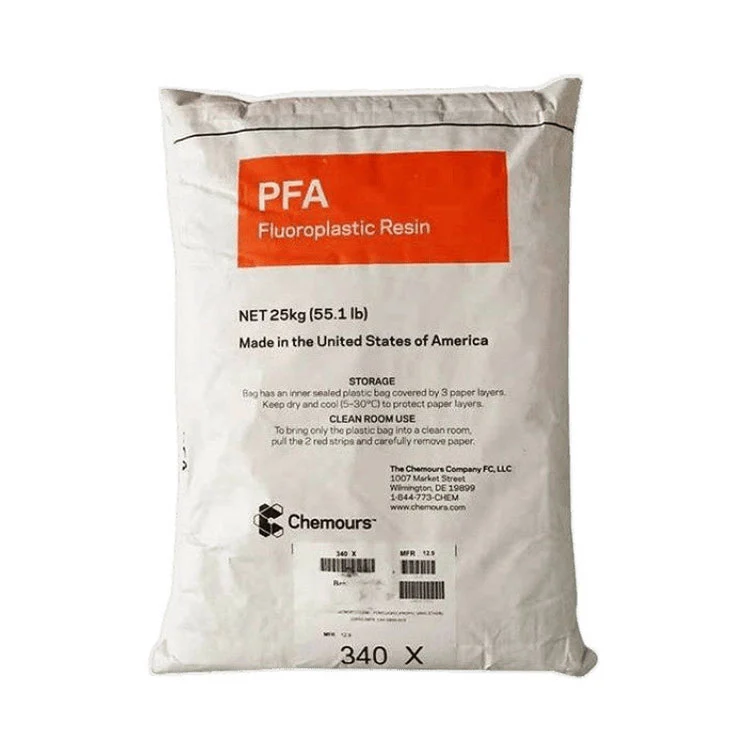
PFA, or perfluoroalkoxy polymer, is a melt-processable fluoropolymer based on tetrafluoroethylene and perfluoroalkoxy vinyl ether. Its combination of chemical resistance, electrical insulation and high-temperature performance makes it suitable for a range of demanding processing applications.
Melt flow rate, or MFR, describes the amount of molten polymer that passes through a specified test apparatus within a defined period, normally reported in g/10 min. The result depends on the test temperature, applied load and test method. MFR values from different manufacturers should therefore only be compared after these conditions have been confirmed.
Within the same product family, a higher MFR generally indicates easier melt flow under the specified test conditions. This characteristic can be useful when resin must move through a narrow die, fill a small mold cavity or form a thin insulation layer.
However, MFR is a processing parameter rather than an overall material-performance rating. Tensile properties, elongation, electrical characteristics, chemical resistance, purity and thermal performance still need to be evaluated from the individual grade specification.
The value of higher melt flow becomes more apparent when product geometry creates greater resistance to filling or extrusion.
Small PFA components can contain thin walls, narrow channels, fine openings or complex cavity sections. A suitable high-flow grade may help the molten resin reach these areas under the manufacturer's recommended processing conditions.
Potential applications include fittings, connectors, valve components, laboratory components and other molded parts where chemical resistance and dimensional requirements are combined with demanding cavity geometry.
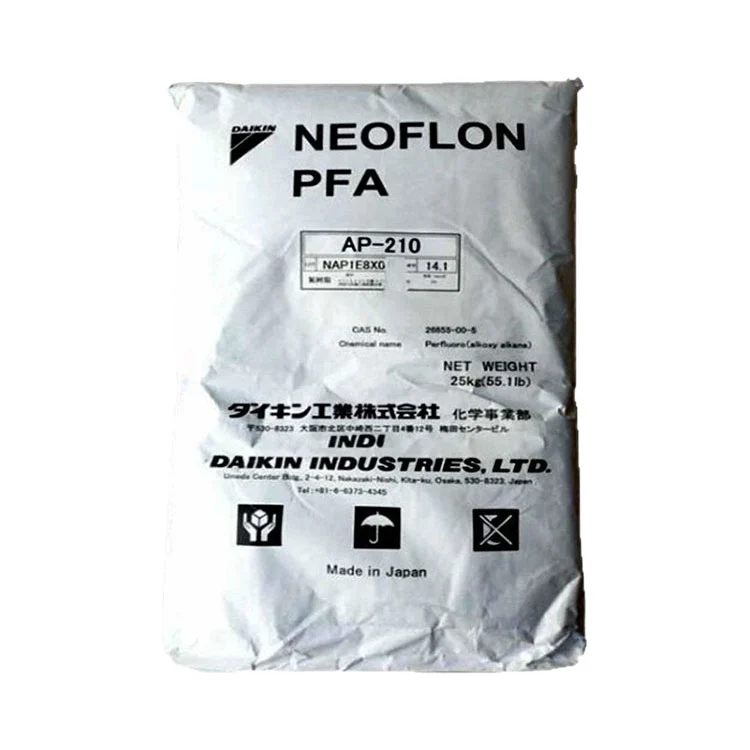
Daikin NEOFLON™ AP-201 is one documented example. Daikin describes the grade for applications including complex small molded shapes and thin-wall wire insulation. The specific material specification and current processing recommendations should be confirmed from the manufacturer's documentation before approval.
Mold design remains important even when a high-flow grade is selected. Gate location, wall thickness, injection speed, melt temperature and cooling conditions can all affect filling and final dimensions.
PFA is used for wire and cable insulation where electrical insulation, chemical resistance and temperature performance are required.
For thin-wall insulation, the resin must pass through the extrusion system and form a consistent layer around the conductor. Grade selection therefore needs to account for conductor diameter, insulation thickness, line speed, die design, dielectric requirements and dimensional tolerances.
A higher-flow grade may fit this type of production, but electrical and mechanical requirements should be checked at the same time rather than using MFR as the only selection criterion.
PFA is used for tubing, fittings, valves, containers and other fluid-handling components exposed to chemical media. The appropriate grade depends on the actual chemical environment, temperature, pressure, product dimensions and required service life.
High-purity applications require additional evaluation. Semiconductor and other contamination-sensitive systems may have requirements for extractables, trace metals, particles and manufacturing controls. A general industrial PFA grade should not be classified as semiconductor-grade simply because it has a high MFR.
Where purity is critical, the manufacturer's grade-specific purity data and application documentation should be reviewed before material approval.
The main distinction between higher- and lower-MFR grades is melt-flow behavior under the specified test conditions.
| Processing consideration | Higher-MFR grade | Lower-MFR grade |
| Melt flow | Generally easier flow under the same test conditions | Generally greater resistance to flow |
| Small or complex cavities | May be useful where filling resistance is high | May require more attention to filling conditions |
| Thin-wall extrusion | May suit applications requiring easier material flow | Other flow characteristics may be preferred |
| Thick sections | Selection depends on geometry and process | May be suitable depending on the processing requirement |
| Wire and cable insulation | Certain thin-wall applications may benefit | Other insulation designs may require different grades |
| Mechanical properties | Must be confirmed from the specific grade | Must be confirmed from the specific grade |
Neither range is universally better. The appropriate grade is the one that provides sufficient melt flow while meeting the mechanical, electrical, chemical, thermal and purity requirements of the finished product.
For this reason, material selection should begin with the manufacturing process and product design rather than simply choosing the highest available MFR.
PFA is processed at temperatures considerably higher than those used for many conventional thermoplastics. Actual melt temperature, mold temperature, residence time, screw conditions and other settings vary between grades and equipment.
Manufacturer processing recommendations should therefore be used when establishing production parameters.
During injection molding, melt temperature, injection speed, gate dimensions, cavity geometry and cooling conditions can affect filling and dimensional stability. For extrusion, die design, draw-down ratio, line speed and wall-thickness control become particularly important, especially for thin products.
Thermal history should also be controlled. Excessive temperature or residence time can affect fluoropolymer processing behavior, so the recommended processing window for the selected grade should be followed when establishing production conditions.
A meaningful comparison should include more than the nominal MFR value.
| Parameter | Why It Matters |
| MFR | Indicates melt-flow behavior under specified test conditions |
| Test method | Allows MFR values from different grades to be compared correctly |
| Melting point | Provides a reference for processing requirements |
| Specific gravity | Useful for material comparison and product weight calculations |
| Tensile strength and elongation | Relevant to mechanical loading, bending and dimensional stress |
| Electrical properties | Important for wire, cable and electrical applications |
| Chemical resistance | Needs to match the actual chemical medium and service conditions |
| Purity and extractables | Important for semiconductor and other contamination-sensitive applications |
| Processing method | Different injection and extrusion processes may require different grade characteristics |
A grade with a similar MFR should not automatically be treated as a substitute. The complete TDS, application requirements and processing conditions should be reviewed before changing materials.
For material sourcing, the specification should connect the resin to the actual production requirement:
Manufacturer → Grade → MFR → Processing Method → Product Geometry → Application → Critical Properties → Purity/Compliance → Quantity
For example, an injection-molding requirement could be specified as:
PFA, MFR 20–40 g/10 min, injection molding, small complex component, high chemical resistance required, electrical insulation required, 500 kg.
A thin-wall wire insulation requirement could instead include:
PFA, high-flow grade, wire extrusion, thin-wall insulation, specified dielectric requirements, conductor diameter and insulation thickness, 1 ton.
For replacement material, the existing manufacturer, grade number and current TDS are particularly useful. They provide a reference for comparing MFR, mechanical properties, electrical characteristics, processing recommendations and other grade-specific data.
For a new requirement, the target MFR should be considered together with the processing method, product geometry, application, critical properties and quantity.
Before approving a grade, the current manufacturer's documentation should be checked against the intended application.
Depending on the product and end use, relevant documentation may include:
Compliance should always be confirmed for the specific grade and intended use. MFR alone does not establish suitability for semiconductor, medical, food-contact, pharmaceutical or electrical applications.
For contamination-sensitive applications, the required purity level, extractables, trace metals and other relevant controls should be confirmed from the manufacturer's documentation rather than inferred from the material's flow characteristics.
It describes PFA grades with relatively high melt flow under specified test conditions. The range is a practical material-selection and sourcing reference rather than a universal industry classification. The test method, temperature and applied load should be confirmed before comparing MFR values.
No. Higher MFR can make filling thin or complex sections easier, but the appropriate value depends on mold or die geometry, processing conditions and the requirements of the finished component.
Yes. Certain PFA grades are developed for injection molding of small or complex components. The selected grade should be checked against cavity geometry, processing conditions and the required mechanical, chemical and thermal properties.
Selected grades can be used for thin-wall wire and cable insulation. Conductor size, insulation thickness, extrusion conditions, dielectric requirements and dimensional tolerances should be considered during grade selection.
The most useful information includes the target MFR, manufacturer or reference grade, processing method, application, product or component geometry, critical properties, purity or compliance requirements and required quantity. For a replacement material, the existing grade number and current TDS can significantly improve the accuracy of the sourcing process.
For High MFR PFA (20–40+ g/10 min) sourcing, provide the target MFR, processing method, application, product or component type, critical performance requirements and required quantity. If you already have a reference manufacturer or grade, the grade number and current TDS can help narrow the comparison.
Nianjing can source and screen PFA materials according to the actual technical and procurement requirements, including manufacturer, grade, MFR, processing method, application, purity requirements and quantity.
Address
China Plastics City, Yuyao City, Ningbo City, Zhejiang Province, China
Tel
Looking for a specific plastic material, brand, grade or quantity? Send your requirements to Nianjing for sourcing and availability confirmation.
Please include the material name, manufacturer or brand, grade, quantity, application and delivery requirements when available. If you are unsure about the grade, simply describe your application and requirements.
Nianjing will review your inquiry and check suitable sourcing options based on your requirements.