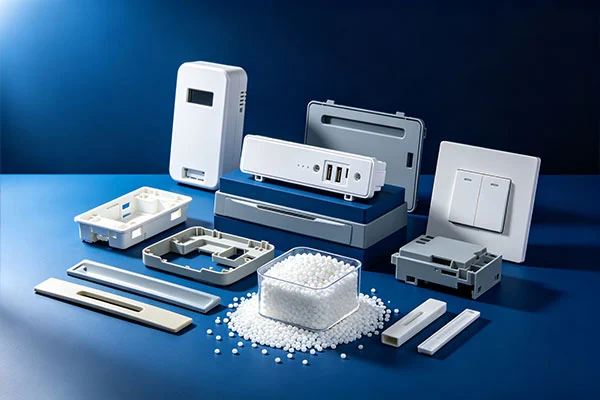
POM-C is commonly considered for molded parts exposed to moisture, hot water, chemicals, or repeated movement. Its combination of dimensional stability, wear resistance, chemical resistance, and processing stability makes it suitable for a wide range of mechanical and precision components.
Nianjing sources POM-C Resin from established producers for buyers who need specific grades, performance levels, colors, or quantities. Based in Yuyao, Zhejiang, China, Nianjing has been engaged in plastic raw material trading and sourcing since 2008, serving retailers, agents, and end-product manufacturers.
POM-C is particularly relevant when a component needs to maintain its mechanical and dimensional performance while operating in a demanding environment.
Gears, bearings, bushings, rollers, guides, cams, and other moving parts can use POM-C because of its low friction and good wear behavior. For these applications, load, sliding speed, mating material, lubrication, temperature, and expected service life should be considered together.
Valves, pump components, fittings, water-control mechanisms, and selected fluid-handling parts can use POM-C where dimensional stability and resistance to the service medium are required.
Selected automotive applications include clips, guides, door-system components, seat-belt parts, fuel-system components, gears, and other non-metallic mechanical parts. The required grade should be checked against temperature, fluid exposure, emissions, odor, durability, and OEM specifications.
POM-C can be used for connectors, switches, appliance mechanisms, zippers, handles, and other precision-molded components where stiffness, wear resistance, and dimensional control are important.
POM-C is the copolymer form of polyoxymethylene, while POM-H is the homopolymer form. The difference in polymer structure results in different performance balances.
POM-C is generally favored when thermal stability during processing, chemical resistance, and hot-water resistance are important. POM-H generally offers higher strength and rigidity and may be preferred for applications where mechanical load is the primary concern.
| Selection Factor | POM-C | POM-H |
| Polymer Type | Copolymer acetal | Homopolymer acetal |
| Processing Thermal Stability | Generally higher | Generally lower |
| Chemical Resistance | Generally broader | Good, grade dependent |
| Hot-Water Resistance | Generally better | Generally lower |
| Strength and Rigidity | High | Generally higher |
| Wear Performance | Good | Good |
| Moisture Absorption | Low | Low |
| Typical Selection | Environmental resistance and balanced performance | Higher strength and rigidity |
The comparison applies to the material families. Individual grades can overlap in performance, so a final substitution should be based on the TDS of the specific grades rather than polymer type alone.
POM-C is a crystalline engineering thermoplastic and is supplied in different grades for injection molding and other processing requirements.
| Property | General Reference |
| Material | POM-C / Copolymer Acetal |
| Density | About 1.40–1.42 g/cm³ |
| Melting Point | Typically around 160–175°C |
| Tensile Strength | Commonly around 60–70 MPa |
| Flexural Modulus | Commonly around 2500–3000 MPa |
| Moisture Absorption | Low |
| Friction Behavior | Low friction with good wear resistance |
These figures are general reference values, not specifications for every POM-C grade. Actual properties vary with producer, formulation, additives, reinforcement, color, and test method. The current producer TDS should be used for material qualification and production approval.
There is no single POM-C grade suitable for every application. Producers offer different formulations to adjust flow, toughness, stiffness, friction, wear, environmental resistance, and regulatory suitability.
| Requirement | Possible Grade Direction |
| Standard molded components | General-purpose POM-C |
| Thin-wall or complex parts | Higher-flow grade |
| Gears and sliding parts | Low-friction or wear-modified grade |
| Higher stiffness | Glass-fiber reinforced grade |
| Repeated impact | Impact-modified grade |
| Outdoor exposure | UV-resistant grade where available |
| Food-contact application | Grade with applicable food-contact documentation |
| Medical application | Grade with applicable medical documentation |
| Automotive low-emission requirements | Grade meeting the relevant OEM specification |
The appropriate grade should be selected from the actual part requirements rather than from the nominal POM-C classification alone.
Nianjing can source POM materials according to a specified producer or grade. Representative POM product families include:
| Producer | Brand / Product Family | General Direction |
| Celanese | Hostaform® | General and modified acetal applications |
| BASF | Ultraform® | Injection-molded engineering components |
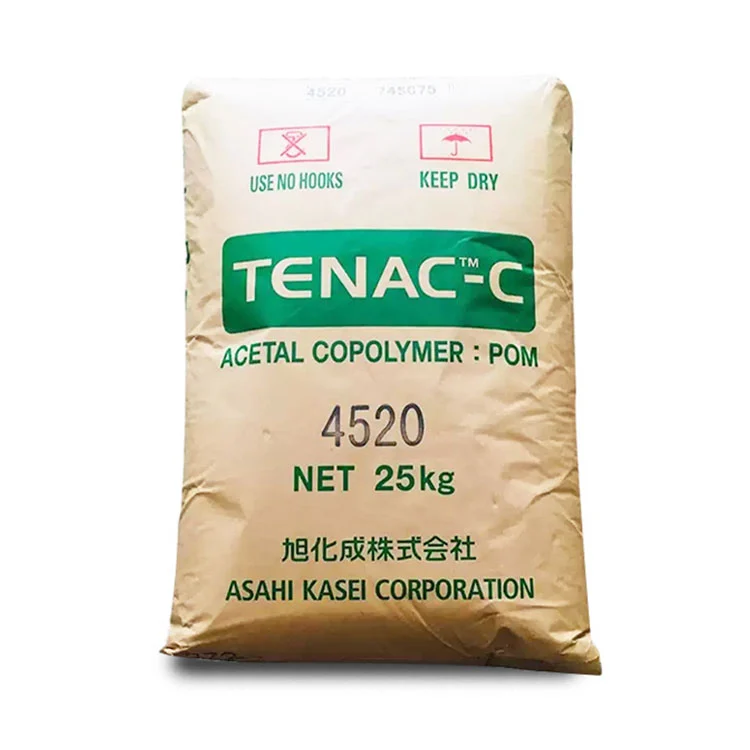
| Asahi Kasei | TENAC™ | General and application-specific POM grades |
Specific grades within these product families can differ in flow, strength, lubrication, reinforcement, impact performance, color, and compliance. Current producer documentation should be checked before a grade is specified for production.
The resin specification is only one part of the final result. Processing and component design can significantly affect the performance of a molded POM-C part.
Material formulation affects friction, wear, toughness, stiffness, UV resistance, and other properties. Lubricants, glass fiber, impact modifiers, and stabilizers can change the behavior of the base resin.
Molding conditions influence crystallization, shrinkage, surface quality, and dimensional accuracy. Melt temperature, mold temperature, packing, cooling, and residence time should therefore be controlled according to the selected grade.
Part geometry also matters. Wall thickness, gate location, flow length, cooling symmetry, and packing conditions can affect shrinkage and warpage.
Service conditions determine whether the selected material will perform as expected. Temperature, chemical exposure, load, humidity, sliding speed, and cycle frequency should be considered during material selection.
For gears, bearings, and sliding components, the mating material and surface condition can also have a significant effect on friction and wear.
Injection molding is the main processing method for POM-C.
General starting references include:
| Processing Parameter | Reference |
| Melt Temperature | Around 190–210°C |
| Mold Temperature | Around 80–100°C |
| Drying | Follow producer's grade-specific guidance |
| Residence Time | Keep as short as practical |
| Injection Speed | Adjust according to grade and part geometry |
These values are starting references rather than universal processing specifications. The selected producer's processing guide should take priority.
POM-C should not be exposed to excessive melt temperatures or unnecessarily long residence times. Thermal degradation can generate formaldehyde and may result in discoloration, surface defects, or reduced material performance. Appropriate machine ventilation and processing procedures should be maintained.
Although POM-C has low moisture absorption, storage conditions should still be considered. If the material has been exposed to moisture or unsuitable storage conditions, follow the producer's recommendations before processing.
Because POM-C is crystalline, shrinkage must also be considered during mold development. Actual shrinkage depends on grade, flow direction, wall thickness, gate design, packing, mold temperature, and cooling conditions.
For material sourcing, a generic request such as "POM-C resin" is usually not enough to identify the correct material.
Buyers can provide the following information:
| Information | Examples |
| Target Material | POM-C / Copolymer Acetal |
| Preferred Producer | Celanese, BASF, Asahi Kasei, or specified alternative |
| Grade | Exact grade number if known |
| Application | Gear, bearing, valve, connector, housing, etc. |
| Processing | Injection molding or machining |
| Flow Requirement | Target MFR or existing grade |
| Mechanical Requirements | Strength, modulus, toughness, creep |
| Wear Requirements | Friction, wear rate, mating material |
| Environment | Water, hot water, fuel, chemicals, UV |
| Modification | Reinforced, lubricated, impact-modified, etc. |
| Color | Natural, black, or specified color |
| Quantity | Trial or production volume |
| Destination | Country or market |
| Documentation | TDS, SDS, COA, compliance documents |
If a replacement material is being considered, providing the existing grade and TDS allows candidate materials to be compared more accurately.
Nianjing is a plastic raw material trading and sourcing company based in Yuyao, Zhejiang, China. Established in 2008, the company operates in China Plastics City and supplies plastic materials to retailers, agents, and end-product manufacturers.
For POM-C procurement, buyers can specify an exact producer and grade or provide the required application and performance profile. Nianjing can then coordinate sourcing based on material requirements, quantity, destination, and available technical documentation.
This approach can also be used when comparing POM-C with POM-H, evaluating a replacement grade, or sourcing an alternative from another producer.
Some POM-C product lines include grades developed for regulated or application-specific uses. These should be evaluated according to the exact grade and intended market.
For food-contact applications, the relevant food-contact regulation, market, food type, temperature, and migration requirements need to be confirmed.
For medical applications, biocompatibility, sterilization conditions, chemical exposure, and device-specific requirements may apply.
For automotive applications, OEM specifications can cover emissions, odor, temperature resistance, fluid compatibility, durability, and other requirements.
Compliance with FDA, EU food-contact requirements, ISO 10993, or other standards should therefore be verified from the documentation for the specific grade rather than assumed from the POM-C material family.
POM-C is generally more suitable when the component faces hot water, moisture, chemicals, or demanding processing conditions. POM-H may be preferable when higher strength or rigidity is the primary requirement.
Common applications include gears, bearings, bushings, rollers, guides, valves, pump components, clips, appliance mechanisms, connectors, and other precision-molded parts.
Selected POM-C grades are suitable for hot-water applications, but the allowable temperature and service life depend on the grade and exposure conditions. The producer's technical data should be checked for the intended environment.
POM-C has relatively low moisture absorption, so its drying requirements are generally less demanding than those of highly hygroscopic engineering plastics. Storage history and the producer's processing recommendations should still be considered.
Some producers offer POM-C grades intended for food-contact applications. The exact grade must have documentation applicable to the target market and intended conditions of use.
The most useful information includes the producer or grade, application, processing method, required properties, color, quantity, destination, and documentation requirements. An existing TDS is especially useful when sourcing a replacement grade.
POM-H Resin · PA66 Resin · PBT Resin · PC Resin · ABS Resin
Address
China Plastics City, Yuyao City, Ningbo City, Zhejiang Province, China
Tel
Looking for a specific plastic material, brand, grade or quantity? Send your requirements to Nianjing for sourcing and availability confirmation.
Please include the material name, manufacturer or brand, grade, quantity, application and delivery requirements when available. If you are unsure about the grade, simply describe your application and requirements.
Nianjing will review your inquiry and check suitable sourcing options based on your requirements.