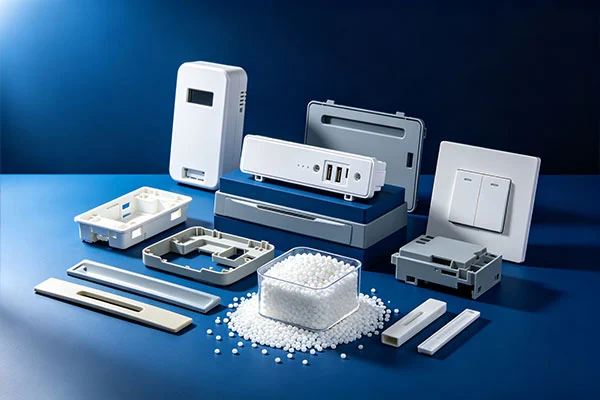
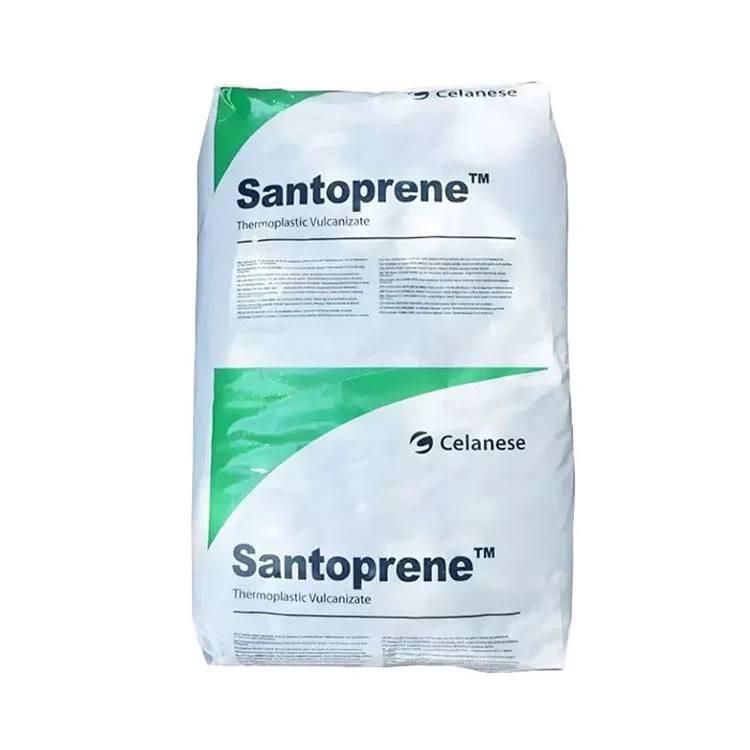
General-Purpose TPV is a thermoplastic vulcanizate designed to provide rubber-like elasticity while retaining the processing characteristics of thermoplastics. It is commonly considered for seals, gaskets, profiles, hoses, protective components and molded parts where flexibility, elastic recovery, weather resistance and efficient thermoplastic processing are required. Nianjing can source TPV grades according to hardness, processing method, application, required properties, manufacturer and quantity.

TPV stands for Thermoplastic Vulcanizate. Many commercial TPV grades are produced by dynamically vulcanizing an EPDM-rich rubber phase within a thermoplastic matrix, commonly polypropylene. This structure allows the material to retain an elastomeric response while being processed using thermoplastic equipment.
The resulting material is different from both conventional thermoset rubber and ordinary thermoplastic elastomers. The rubber phase provides elasticity and recovery, while the thermoplastic phase allows the compound to be processed through methods such as injection molding and extrusion.
The exact formulation varies between manufacturers and grades. Therefore, TPV should not be treated as a material with one fixed hardness, temperature range or chemical-resistance profile. When selecting a grade, the manufacturer's TDS should be used to confirm the properties relevant to the intended application.
One of the main reasons TPV is used in place of conventional rubber is the combination of elastic behavior and thermoplastic processing. Depending on the grade, TPV can provide useful resistance to weathering, ozone, repeated flexing and compression deformation, making it suitable for many sealing and flexible-component applications.
TPV is commonly selected for parts that need to remain flexible and recover their shape after deformation. This is particularly important for seals and gaskets that remain under compression during service.
Compression set is one of the key parameters to examine for these applications. A lower compression-set value generally indicates better recovery after prolonged compression under the specified test conditions, but results should only be compared when the test temperature, time and method are equivalent.
For dynamic seals, elastic recovery, tensile properties, fatigue resistance and resistance to environmental exposure may all need to be considered together rather than using compression set as the only selection criterion.
Many TPV formulations provide good resistance to outdoor exposure, including ozone and UV conditions. This is one reason TPV is widely used in automotive sealing systems and exterior components.
However, weatherability is grade dependent. Color, stabilizer package, part thickness, exposure conditions and service temperature can affect long-term performance. When a part will remain outdoors for an extended period, weathering data for the actual grade should be requested rather than relying only on the general TPV designation.
TPV can retain useful flexibility over a relatively broad temperature range, but there is no single operating-temperature range that applies to all grades.
The suitable temperature range depends on the formulation, hardness and application. A material intended for an automotive seal may have different temperature requirements from a consumer-product grip or an industrial gasket.
For material selection, it is better to specify the actual minimum and maximum service temperatures and the duration of exposure. The manufacturer's TDS can then be used to evaluate changes in hardness, tensile properties, compression set and other relevant characteristics.
TPV can provide useful resistance to water, aqueous solutions and selected automotive or industrial fluids, but its chemical resistance is not universal.
The result can vary significantly depending on the chemical, concentration, temperature and exposure time. Oils, fuels, solvents and aggressive chemicals should therefore be evaluated against actual test data when they are part of the operating environment.
If a component will be exposed to engine oil, transmission fluid, coolant, cleaning agents or another specific chemical, the exact fluid and service conditions should be included in the material inquiry.
TPV is processed as a thermoplastic material after the rubber phase has been dynamically vulcanized. This allows manufacturers to use processes such as injection molding, extrusion and, for suitable grades, blow molding.
The processing method should be selected according to the grade. Some grades are developed primarily for extrusion and sealing profiles, while others provide flow characteristics more suitable for injection molding. Teknor Apex, for example, identifies its Sarlink 3100 series as general-purpose TPVs suitable for injection molding, blow molding and extrusion, with grades covering a broad hardness range.
Thermoplastic processing can also simplify production compared with conventional thermoset rubber because a separate post-molding vulcanization step is not required. However, this does not mean that all TPV scrap can automatically be recycled at a 100% rate. Regrind use depends on the grade, contamination, processing history and required finished-part properties, so recycling conditions should be established for the actual production process.
Injection molding is commonly used for TPV seals, gaskets, protective parts, grips, bushings and other molded components.
The required grade should be matched to the part geometry and mold design. Flow behavior, melt elasticity, hardness, shrinkage, surface appearance and demolding behavior can affect production results.
For complex parts, a high-flow grade may be more appropriate than a general extrusion grade. Conversely, a grade selected for easy injection molding should not automatically be assumed to provide the melt strength required for continuous profile extrusion.
Processing temperatures, injection speed, holding conditions and cooling should be established from the manufacturer's recommendations and confirmed through production trials.
Extrusion is particularly important for TPV sealing profiles, tubing, weatherstrips, gaskets and other continuous products.
Extruded parts require sufficient melt strength and dimensional stability to maintain the intended profile during cooling. Surface appearance and elastic recovery can also be important for visible sealing systems.
TPV is used in building and construction sealing applications as well as automotive profiles. Teknor Apex describes Sarlink TPV applications including static and dynamic seals, boots, membranes and expansion joints, with emphasis on weatherability, shape retention and extrusion performance.
For an extrusion project, the sourcing request should therefore include the profile design, required hardness, line speed where relevant, color, dimensions and any co-extrusion or bonding requirements.
Automotive sealing remains an important application for TPV. Depending on the grade, products can include door seals, glass-run channels, gaskets, boots, plugs and other flexible components. Automotive requirements may include weather resistance, compression-set performance, low-temperature flexibility, fluid resistance and long-term elastic recovery.
In industrial applications, TPV can be considered for gaskets, seals, protective covers, flexible profiles, tubing and molded components. The selection depends on the operating environment and the required resistance to chemicals, temperature, abrasion or repeated deformation.
In building and construction, TPV can be used for sealing profiles, gaskets, membranes and other flexible components exposed to outdoor conditions. UV, ozone, temperature cycling and long-term shape retention can be important selection criteria.
Consumer and electrical products may use TPV for grips, handles, flexible covers, seals and other components where a soft elastomeric feel is required. Electrical suitability should be evaluated separately because TPV does not automatically provide a particular flame rating or electrical certification.
Hardness is one of the first parameters normally specified when purchasing TPV. Commercial products cover a broad range of hardness levels, but the available range depends on the manufacturer and product family.
Hardness should not be considered independently. A softer grade may provide better flexibility and tactile performance, while a harder grade can offer greater support and dimensional stability. Compression set, tensile strength, elongation, tear resistance, abrasion resistance and temperature performance may change with hardness and formulation.
The appropriate grade is therefore determined by the finished component rather than by hardness alone.
For example, a door seal may require a specific balance between compression force, recovery and flexibility, while a protective housing may require greater stiffness and dimensional stability. Both parts could use TPV, but they would not necessarily use the same grade.
TPV is often considered as an alternative to EPDM in applications where thermoplastic processing, part integration or manufacturing efficiency is important.
The comparison should not be reduced to “TPV is better than EPDM.” EPDM remains widely used for demanding sealing applications and may provide advantages in particular temperature, chemical or long-term service conditions.
TPV can be attractive when injection molding, extrusion, co-molding, lightweighting or simplified production is important. The final decision should be based on the actual requirements of the part, including compression set, tensile properties, weather exposure, fluid contact, temperature and expected service life.
TPV belongs to the broader family of thermoplastic elastomers, but it should not be treated as interchangeable with TPS, TPU or other TPE chemistries.
TPV is commonly based on a dynamically vulcanized rubber phase and thermoplastic matrix, while TPS materials generally use styrenic block-copolymer systems and TPU is based on polyurethane chemistry.
These materials can overlap in applications such as grips, seals and flexible molded parts, but their resistance to heat, oils, abrasion, weathering, compression and processing behavior can differ substantially.
The material should therefore be selected from the actual service conditions rather than by hardness alone.
Because many TPV formulations use a polyolefin thermoplastic phase, selected grades can be compatible with polypropylene in overmolding or co-extrusion applications. However, compatibility does not mean that every TPV will automatically form a strong bond with every PP grade.
Bond strength depends on the TPV formulation, PP substrate, surface condition, processing temperature, mold design and other production parameters. If a bonded structure is required, a grade specifically intended for adhesion or co-molding should be considered.
The same assumption should not be extended to polar plastics such as PA or ABS. Adhesion to these substrates generally requires a specially designed material system, surface treatment or an appropriate bonding layer.
Established manufacturers offer TPV portfolios covering general-purpose, automotive, extrusion, molding, fluid-resistant and other application-specific grades.
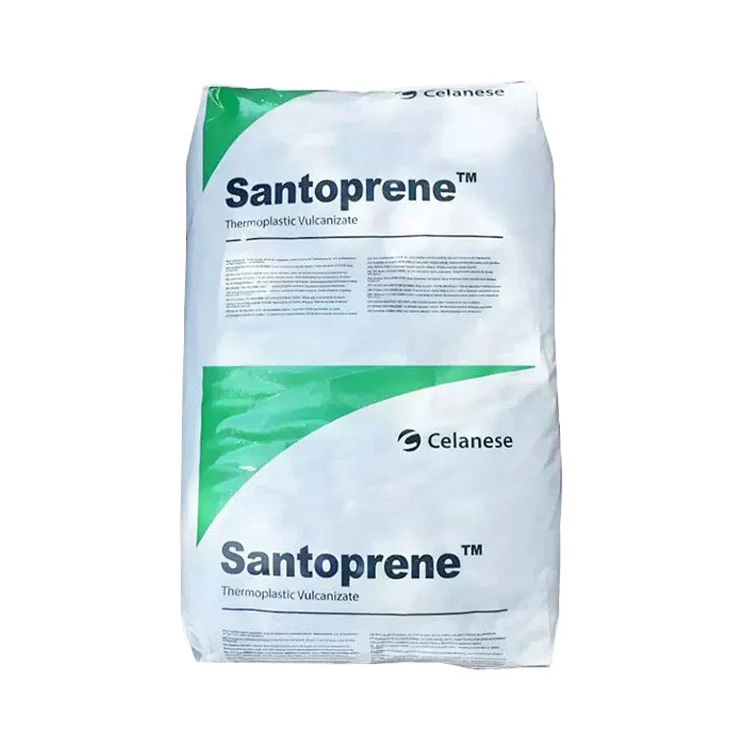
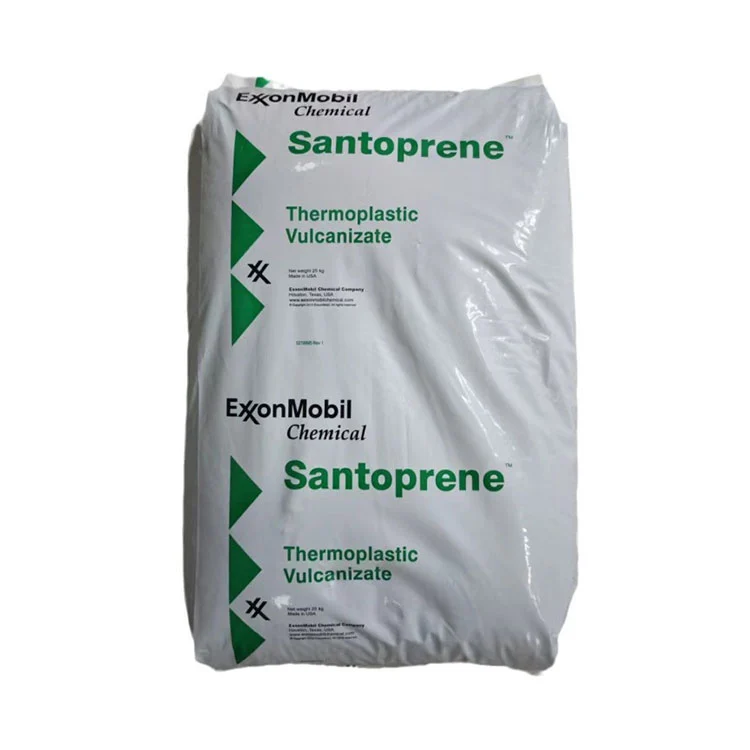
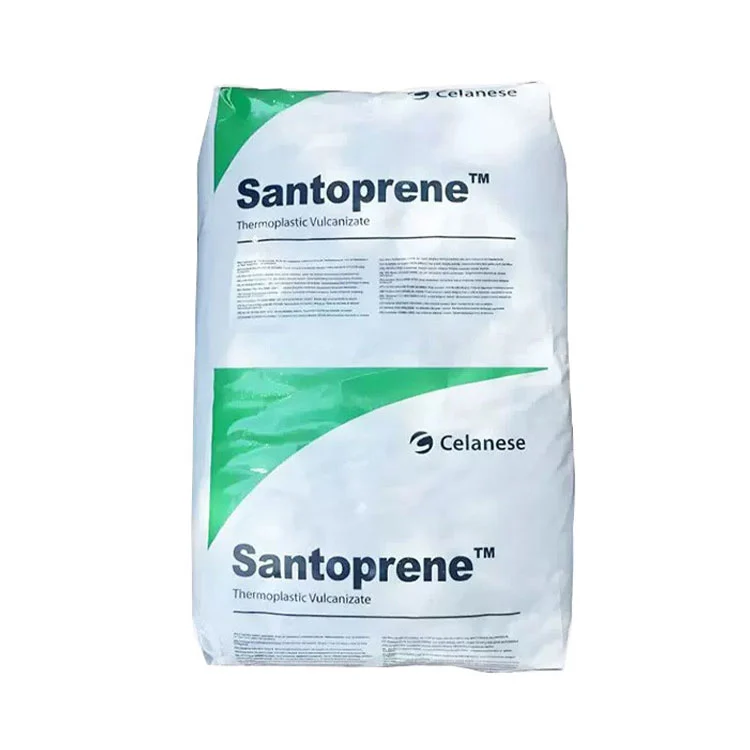
ExxonMobil's Santoprene™ portfolio includes general-purpose series such as 101/103 and 201/203, with different hardness ranges and options for molding and extrusion. Its product literature also separates general-purpose grades from specialty categories such as detergent-resistant, improved-elasticity, potable-water and food-contact grades.
Teknor Apex offers Sarlink® TPV grades, including the 3100 general-purpose series and other families designed for extrusion, high-flow molding, colorability and specific performance requirements.
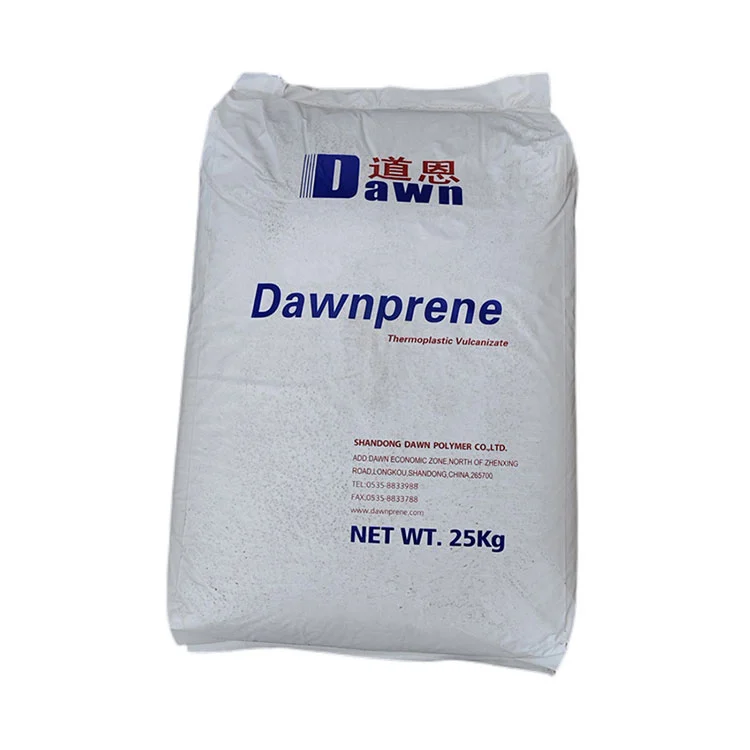
Dawn and other regional manufacturers also supply TPV grades for automotive, electrical, industrial and consumer applications. Availability, formulation and technical properties should be confirmed against the manufacturer's current TDS for the specific grade.
Nianjing can work from a preferred manufacturer and grade, or compare available grades according to hardness, processing method, application and required properties.
The most useful parameters depend on the intended application.
For sealing applications, compression set, tensile strength, elongation, hardness, tear strength, heat aging and weathering data are often important.
For molded components, melt flow or flow characteristics, shrinkage, hardness, tensile properties and surface appearance may need to be considered.
For extruded profiles, melt strength, extrusion behavior, dimensional stability, compression set and long-term recovery can be particularly relevant.
For automotive applications, additional requirements may include fogging, odor, fluid resistance, weathering, low-temperature behavior or OEM-specific specifications.
A grade should therefore be evaluated using the complete TDS rather than one headline property.
TPV processing conditions are grade specific. Melt temperature, mold temperature, screw speed, injection speed, residence time and cooling conditions can influence the finished part.
The material should be stored according to the manufacturer's recommendations and protected from contamination. Before production, the selected grade should be evaluated on the actual machine because equipment design, mold geometry and cycle conditions can affect process stability.
Unlike hygroscopic materials such as some polyamides and TPU grades, many TPV products do not normally require pre-drying, but this should not be generalized to every formulation. Teknor Apex, for example, specifically describes its Sarlink 6100 and 6700 series as non-hygroscopic and states that pre-drying is unnecessary for those products.
Compliance requirements should be matched to the exact grade and application.
Depending on the project, the required documentation may include a Technical Data Sheet, Safety Data Sheet, RoHS or REACH information, UL documentation, food-contact documentation, potable-water certification or other application-specific test reports.
A TPV grade should not be described as food-contact, medical, potable-water or flame-retardant simply because the manufacturer offers products for those markets. ExxonMobil's own Santoprene literature, for example, separates general-purpose grades from grades specifically identified for potable water and non-fatty food contact.
For regulated applications, the compliance document should correspond to the exact grade and intended use.
A useful TPV inquiry should start with the finished product rather than only the material name.
For example:
TPV, Shore A 70–80, extrusion, automotive sealing profile, outdoor exposure, low compression set required, black, initial quantity 1 ton.
For a molded component:
TPV, Shore A 60, injection molding, protective cover, good weather resistance and elastic recovery required, annual demand 5 tons.
If replacing an existing material, provide the original manufacturer, grade number and TDS whenever possible. This gives the supplier a much better basis for comparing hardness, compression set, tensile properties, processing behavior and environmental resistance.
For co-molded or co-extruded products, the substrate material should also be specified, together with the required bond strength and production process.
It is commonly used for seals, gaskets, profiles, hoses, boots, protective components, grips and other flexible molded or extruded products. The exact application depends on the grade's hardness, processing characteristics and resistance requirements.
No. TPV and EPDM can be considered for some of the same sealing applications, but they are different material systems. TPV is designed for thermoplastic processing, while conventional EPDM is a thermoset rubber that requires vulcanization during production.
Yes. Many TPV grades are designed for injection molding. The appropriate grade depends on flow characteristics, hardness, part geometry and required finished-part properties. Some grades are also designed for extrusion or blow molding.
Not necessarily. Drying requirements depend on the formulation and grade. Some TPV products are described by their manufacturers as non-hygroscopic and do not require pre-drying, while other material systems may have different handling recommendations. The current processing guide for the selected grade should be followed.
Hardness, compression set, tensile and tear properties, elastic recovery, temperature performance, weatherability and fluid resistance are commonly considered. The relative importance of each parameter depends on whether the seal is static or dynamic and on the actual service conditions.
Selected TPV grades can be used with polypropylene in overmolding or co-extrusion applications, but compatibility and bond strength are grade and process dependent. A TPV should not be assumed to bond strongly to every PP grade without testing.
Many TPV grades provide good UV, ozone and weather resistance and are used in outdoor sealing and automotive applications. However, outdoor performance is grade specific, so the relevant weathering data should be checked for the intended exposure conditions.
Start with the application, hardness, processing method and operating environment. Then compare compression set, tensile properties, temperature performance, chemical resistance, weatherability and other requirements using the manufacturer's TDS.
If you are sourcing General-Purpose TPV, send Nianjing the required hardness, processing method, application, key performance requirements and quantity. If you already use a Santoprene, Sarlink, Dawn or other manufacturer's grade, providing the exact grade reference and TDS can help Nianjing check the corresponding supply or alternative grades.
Address
China Plastics City, Yuyao City, Ningbo City, Zhejiang Province, China
Tel
Looking for a specific plastic material, brand, grade or quantity? Send your requirements to Nianjing for sourcing and availability confirmation.
Please include the material name, manufacturer or brand, grade, quantity, application and delivery requirements when available. If you are unsure about the grade, simply describe your application and requirements.
Nianjing will review your inquiry and check suitable sourcing options based on your requirements.