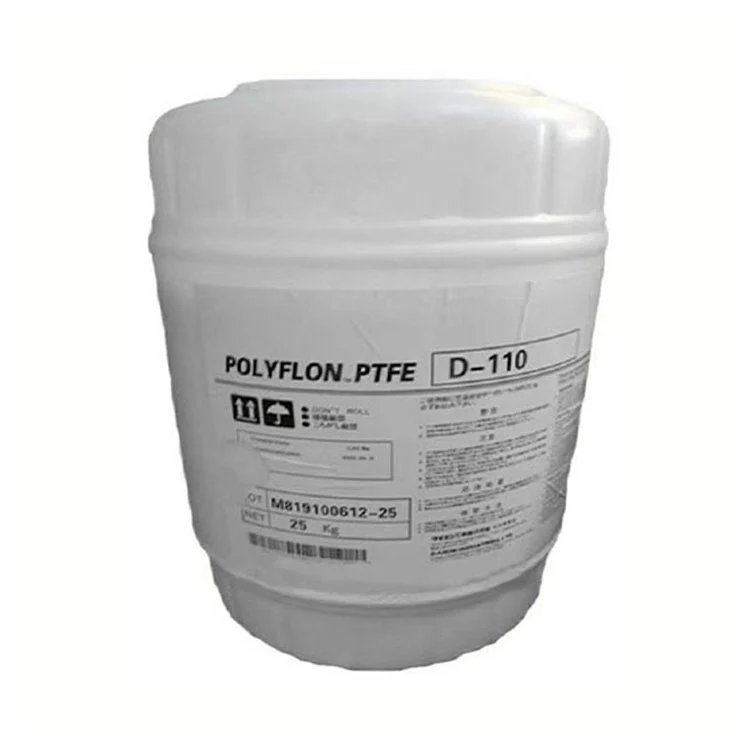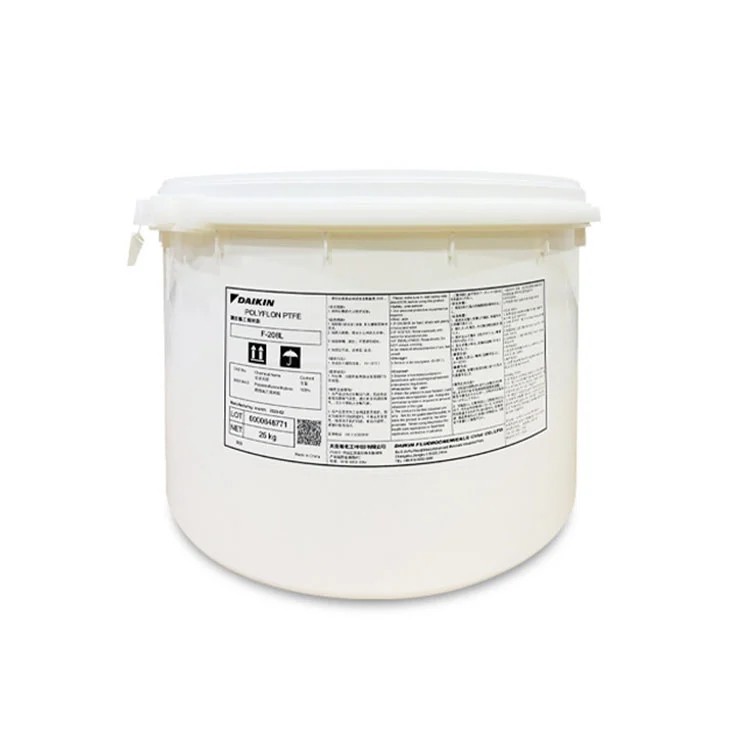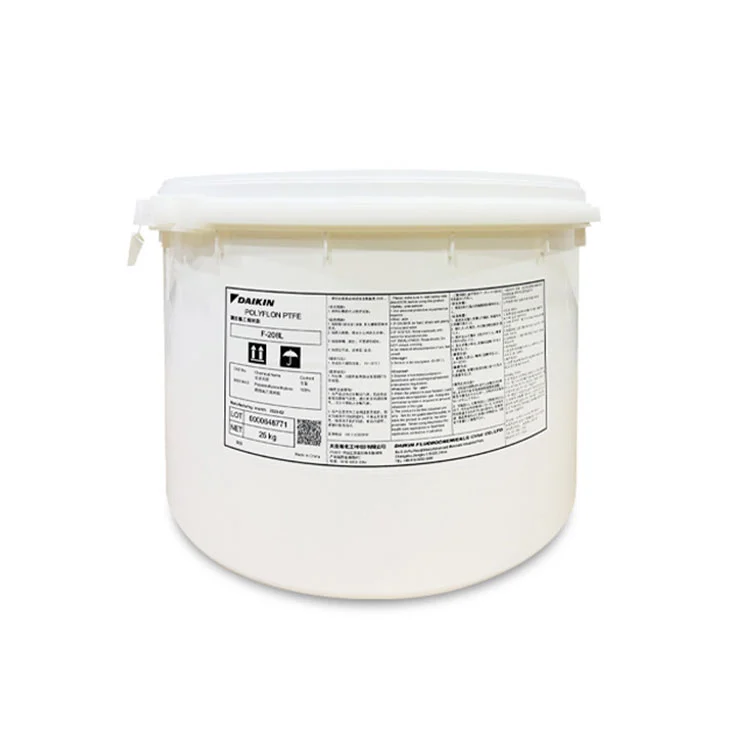
PTFE Suspension Resin is supplied as molding powder or granular material for processes such as compression molding, automatic molding and ram extrusion. Grade selection normally depends on the resin form, particle characteristics, standard specific gravity (SSG), processing method and end-use requirements. Nianjing can check suitable grades according to the required manufacturer, grade, application and quantity.

PTFE, or polytetrafluoroethylene, is a fluoropolymer based on tetrafluoroethylene. It is known for its chemical resistance, low friction, electrical insulation and stability at elevated temperatures.
Suspension-polymerized PTFE is commonly supplied for molding applications. Depending on the grade, the material may be designed for compression molding, automatic molding, isostatic molding or ram extrusion.
PTFE differs from conventional thermoplastics in the way it is processed. Although it has a melting point of about 327°C, its melt viscosity remains very high, so it is not normally processed by conventional injection molding. Molding grades are generally compacted into a preform and then sintered under controlled conditions.
For this reason, the processing route is an important part of grade selection. A material that performs well in compression molding is not automatically suitable for another PTFE processing method.
PTFE is used when a component requires a combination of properties that conventional plastics may not provide.
PTFE has high resistance to many acids, alkalis, solvents and other aggressive media. It is therefore used in seals, gaskets, valve parts, pump components and corrosion-resistant linings.
Actual chemical compatibility depends on the medium and operating conditions. Concentration, temperature, pressure and exposure time should be considered when evaluating a material for service.
PTFE is commonly used for applications involving continuous temperatures around 260°C, although the applicable limit depends on the grade, component design and operating conditions.
The service temperature should not be confused with the processing temperature. PTFE requires controlled heating and sintering, and the manufacturer's processing instructions should be followed to avoid excessive thermal exposure.
PTFE provides strong electrical insulation and stable dielectric performance. It is used for insulating parts, sleeves, wire and cable components and selected high-frequency electrical applications.
Where electrical performance is critical, the relevant dielectric, mechanical and dimensional data should be checked for the specific grade.
The low friction behavior of PTFE makes it suitable for sliding and release applications. Typical parts include bearings, guide components, valve seats and piston rings.
Where higher wear resistance, load capacity or creep resistance is required, a modified or filled grade may be considered instead of unfilled PTFE.
The physical form of PTFE affects powder handling, filling and forming behavior. Product terminology can differ between manufacturers, so the grade specification should be checked before making a substitution.
Molding powders are used mainly for compression and related forming processes. Particle size, particle distribution, bulk density and powder morphology can vary between grades and influence preforming and sintering behavior.
Granular grades are designed for controlled powder handling and mold filling. Depending on the product, they may be used for automatic molding, compression molding, isostatic molding or ram extrusion.
For automated production, consistent feeding and mold filling can be important to maintaining part density and dimensional consistency.
Some PTFE grades are supplied in presintered or specially treated forms for particular extrusion applications. Their processing behavior differs from conventional molding powders.
Selection should therefore be based on the extrusion equipment, product dimensions and manufacturer's processing recommendations rather than SSG alone.
The production process and finished component should be defined before comparing individual grades.
A practical material specification can include:
Manufacturer → Grade → Resin Form → Particle Size → SSG → Processing Method → Application → Critical Properties → Quantity
For automatic molding, powder flow, particle characteristics, SSG and filling behavior may be important. For ram-extruded tubes, rods or profiles, extrusion behavior and the required mechanical, electrical or chemical properties become more relevant.
When replacing an existing material, the original manufacturer, grade number and current TDS provide a useful starting point. They allow the proposed material to be compared against the original specification instead of relying only on a general PTFE classification.
Standard specific gravity (SSG) is commonly used to identify and compare PTFE molding materials. ASTM D4894 covers granular PTFE molding and extrusion materials and considers SSG together with other characteristics such as particle size, bulk density, water content, thermal instability and tensile properties.
SSG is useful for comparing grades, but it should not be treated as a standalone indicator of processing behavior or finished-part performance. Depending on the application and forming method, a material comparison may also consider particle size and distribution, bulk density and powder flow, tensile strength and elongation, thermal stability, water content, dimensional shrinkage, electrical properties and the recommended processing conditions.
For filled materials, the filler type and content should be included in the specification because they can affect the material's processing behavior and final properties. When comparing grades from different manufacturers, the applicable test method and test conditions should be checked alongside the reported numerical values to ensure that the data are technically comparable.
PTFE molding materials are used across several industrial applications, including:
Chemical processing:
Seals, gaskets, valve components, pump parts and corrosion-resistant linings.
Fluid handling:
Tubes, diaphragms, valves and sealing components exposed to aggressive media.
Electrical applications:
Insulating components, sleeves and selected high-frequency parts.
Mechanical equipment:
Bearings, guide parts, piston rings, valve seats and other sliding components.
The required resin form depends on the production method. Compression molding, automatic molding and ram extrusion can require different material characteristics even when the finished components are made from the same base polymer.
Established fluoropolymer manufacturers offer different PTFE grades for molding and extrusion applications. The relevant grade should always be checked against the current technical documentation.
Chemours — Teflon™ PTFE
Teflon™ includes PTFE materials for molding and other fluoropolymer applications.
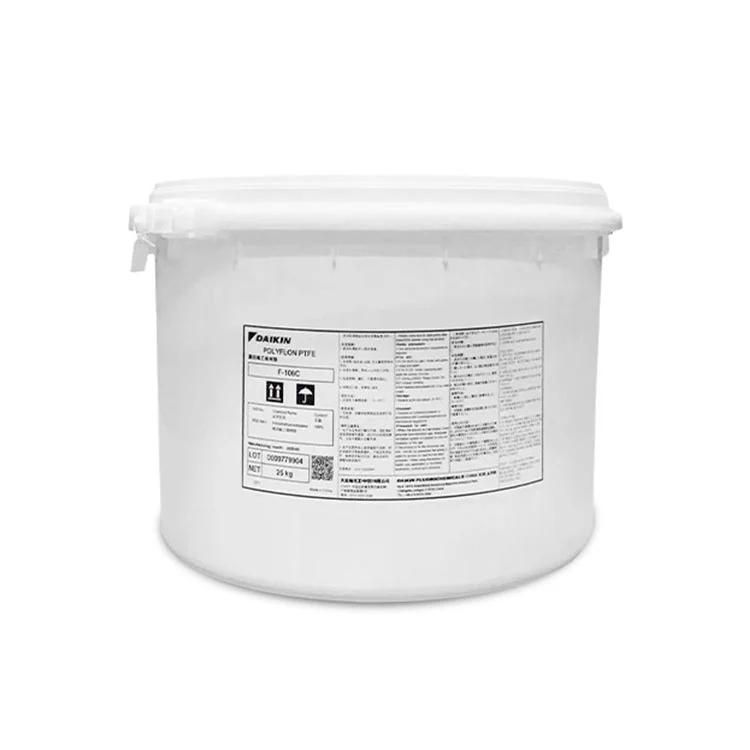
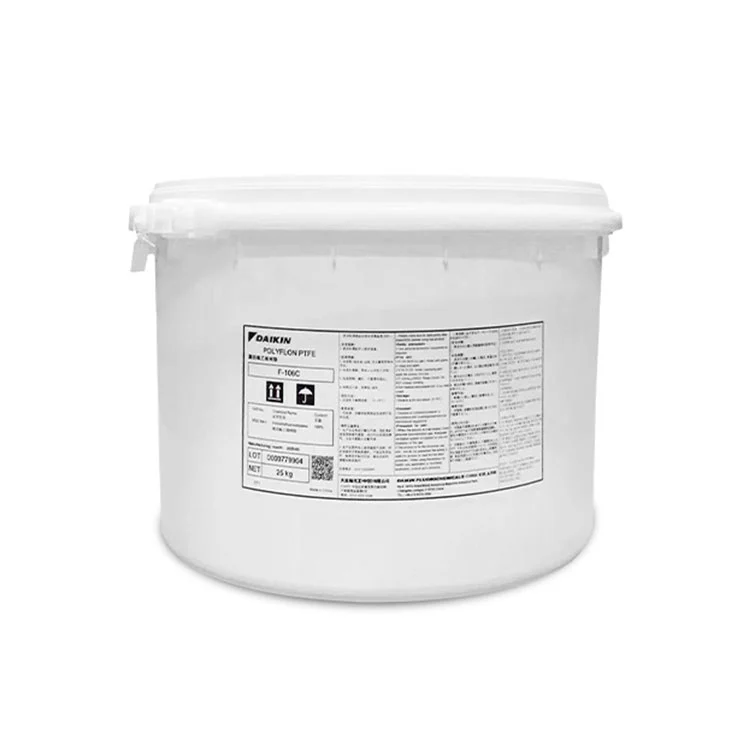
Daikin — POLYFLON™ PTFE
POLYFLON™ includes granular molding grades with different characteristics for compression molding and related processes.
AGC — Fluon® PTFE
Fluon® PTFE includes molding materials with different particle and processing characteristics.
3M — Dyneon™ PTFE
Dyneon™ offers suspension-polymerized and free-flowing PTFE grades for molding-related applications.
Solvay — Algoflon® PTFE
Algoflon® covers PTFE grades for different material and processing requirements.
Chinese manufacturers also supply PTFE molding materials. When comparing domestic and imported grades, the more useful reference is the actual TDS, test method, processing behavior and application requirement.
Virgin PTFE is generally used when the standard properties of unfilled PTFE meet the application requirements.
Modified PTFE can be selected when additional control of properties such as creep, dimensional stability or processing behavior is required.
Filled PTFE incorporates materials such as glass fiber, carbon or graphite to change properties including wear resistance, compression behavior, creep resistance or dimensional stability. Filler type and loading should be treated as part of the material specification because they can significantly affect performance.
PTFE molding generally involves powder preparation, forming and sintering.
In compression molding, the powder is compacted into a preform before controlled sintering. Automatic molding places greater emphasis on consistent powder feeding and mold filling. Ram extrusion requires a material with characteristics suited to continuous forming.
Sintering conditions vary with the grade, part geometry, wall thickness and equipment. A fixed temperature profile should therefore not be applied to every PTFE material. The manufacturer's processing data should be used for the selected grade.
Processing temperature and ventilation also require attention. The applicable SDS and technical documentation should be reviewed before production, particularly where the material is exposed to elevated temperatures for extended periods.
The following documents may be required when evaluating or approving a PTFE grade:
Documentation requirements depend on the material and end use. Food-contact, electrical, medical and other regulated applications should be assessed against the documentation for the exact grade rather than the general properties of PTFE.
For replacement projects, the original TDS and the proposed grade's current documentation should be compared before production testing.
They differ in polymerization, material form and typical processing route. Suspension-polymerized PTFE is commonly supplied for molding and ram extrusion, while fine-powder PTFE is widely used for paste extrusion. Aqueous PTFE dispersions are used for applications such as coatings and impregnation.
These forms should not be treated as interchangeable without checking the processing requirements.
The difference is mainly related to particle morphology, powder flow and processing behavior. Granular materials may provide advantages in handling and automated mold filling, while other molding powders are designed for specific forming methods. The actual characteristics depend on the individual grade.
SSG is a useful identification and comparison parameter for PTFE molding materials. It should be reviewed together with particle characteristics, mechanical properties and processing data rather than used as the only basis for grade selection.
A filled grade may be appropriate when the application requires properties that are difficult to obtain from unfilled PTFE, such as improved wear resistance, creep resistance, compression behavior or dimensional stability. The filler system and loading should be evaluated together with the base resin.
Useful information includes the preferred manufacturer or grade, resin form, particle size, SSG, processing method, application, critical properties, quantity and delivery requirements.
For a replacement project, the existing grade number and TDS are particularly useful for evaluating alternatives.
Nianjing can check potential alternatives based on an existing manufacturer and grade or screen available materials according to the required resin form, particle characteristics, SSG, processing method and application. The proposed material should be confirmed against current technical data and, where necessary, production trials.
Provide the required manufacturer or grade, resin form, particle size, SSG, processing method, application and quantity for a sourcing inquiry. If an existing material needs to be replaced, the original TDS or specification can help Nianjing compare suitable grades and identify potential alternatives.
Address
China Plastics City, Yuyao City, Ningbo City, Zhejiang Province, China
Tel
Looking for a specific plastic material, brand, grade or quantity? Send your requirements to Nianjing for sourcing and availability confirmation.
Please include the material name, manufacturer or brand, grade, quantity, application and delivery requirements when available. If you are unsure about the grade, simply describe your application and requirements.
Nianjing will review your inquiry and check suitable sourcing options based on your requirements.