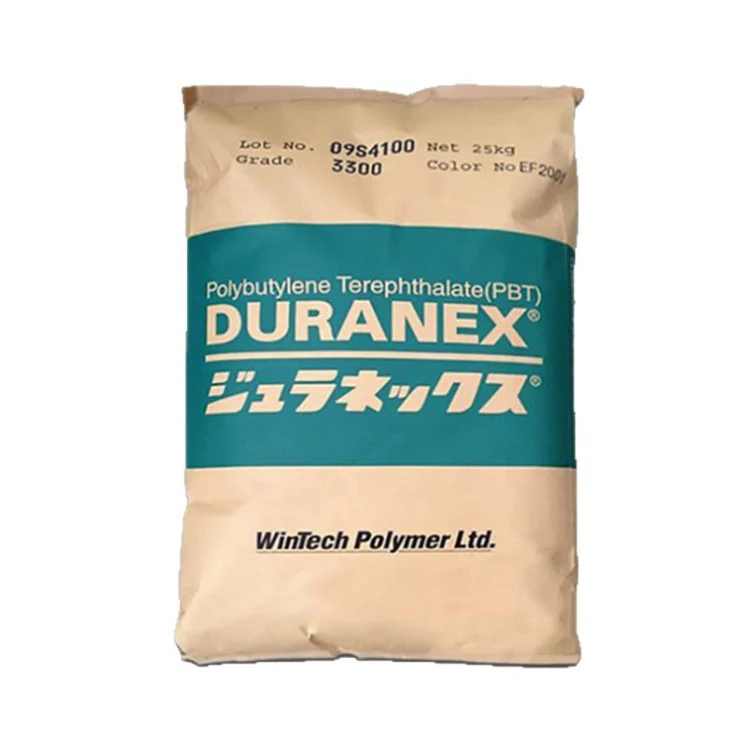
Selecting reinforced PBT for an injection-molded part usually starts with the required glass fiber content, stiffness, dimensional stability, thermal performance, and processing conditions. Glass Fiber Reinforced PBT is available in different reinforcement levels, while individual grades can also differ in flow, hydrolysis resistance, flame retardancy, shrinkage, and surface appearance.
Nianjing supplies and sources PBT materials for applications where a reinforced polyester is required. Material selection can be based on the required glass fiber content, mechanical requirements, processing method, operating environment, and available grade documentation.

Glass fiber is added to PBT to change its mechanical and dimensional behavior. As the reinforcement level increases, stiffness and strength generally increase, while molding shrinkage and anisotropy also become more important to part design and processing.
Typical reinforcement ranges include:
| Glass Fiber Content | General Characteristics | Selection Considerations |
| GF10–15 | Moderate reinforcement with improved stiffness and dimensional stability | Suitable when reinforcement is required without moving to a highly filled grade |
| GF20–30 | Higher stiffness and strength than lower-filled grades | Common choice for structural and dimension-sensitive molded parts |
| Above GF30 | Higher reinforcement level with increased stiffness | Requires closer attention to flow, fiber orientation, shrinkage, surface finish, and mold design |
These ranges are general reference points. The actual properties of a PBT grade depend on its formulation, additive package, glass fiber type, processing conditions, and test method.
PBT GF30 normally refers to polybutylene terephthalate reinforced with approximately 30% glass fiber by formulation or grade designation.
Compared with unfilled PBT, a GF30 grade is generally selected when a molded component requires higher stiffness, strength, and dimensional stability. The added glass fiber can also affect shrinkage behavior and fiber orientation during injection molding.
However, "GF30" alone does not define a complete material specification. Two PBT GF30 grades may have different:
For this reason, the exact grade and technical data sheet should be checked before substituting one GF30 material for another.
The following data is an example of a 30% glass fiber reinforced PBT grade. It is provided to show the type of technical information used during material evaluation and should not be treated as a specification for all PBT GF30 grades.
| Property | DURANEX 3300H |
| Glass Fiber Content | 30% |
| Density | 1.53 g/cm³ |
| Tensile Strength | 140 MPa |
| Flexural Strength | 215 MPa |
| Flexural Modulus | 9,000 MPa |
| Charpy Notched Impact Strength | 11.4 kJ/m² |
| Heat Deflection Temperature, 1.8 MPa | 210°C |
| Water Absorption | 0.1% |
The values above are specific to the referenced grade and its test conditions. When comparing alternative materials, the same test standard and conditioning requirements should be used where possible.
Glass fiber content is only one part of material selection. The required performance of the finished component should be considered together with the molding process and service environment.
| Requirement | Material Factor to Check |
| Structural stiffness | Glass fiber content, flexural modulus, flexural strength |
| Dimensional stability | Shrinkage, fiber orientation, grade formulation |
| Elevated-temperature use | Thermal performance and heat deflection temperature |
| Moisture or hot-water exposure | Hydrolysis resistance and water absorption |
| Electrical components | Insulation properties and required flame rating |
| Thin-wall molding | Melt flow and filling behavior |
| Visible surfaces | Surface finish and fiber-related appearance |
| Outdoor or automotive use | Temperature, moisture, chemical exposure, and aging requirements |
A higher glass fiber content is not automatically the better choice. If the component has a strict surface appearance requirement or complex flow path, a lower-filled or specially formulated grade may be more suitable.
The glass fibers influence how the material flows and shrinks during injection molding. These effects should be considered when a reinforced PBT grade is selected for a new mold or when replacing an existing material.
Glass fiber orientation can create different shrinkage behavior in different directions. Long flow paths, uneven wall thickness, ribs, and changes in section geometry can increase the risk of dimensional deviation.
Processing conditions and mold design can affect the appearance of glass-filled surfaces. Parts with visible surfaces may require a grade formulated for improved surface appearance rather than simply selecting a higher glass fiber content.
Flow splits around holes, inserts, ribs, and other mold features can create weld lines. Their position and strength should be considered when the component carries mechanical loads.
Mold temperature, cooling conditions, packing pressure, gate location, and fiber orientation can all affect final dimensions. Production trials should therefore be evaluated together with the selected material grade.
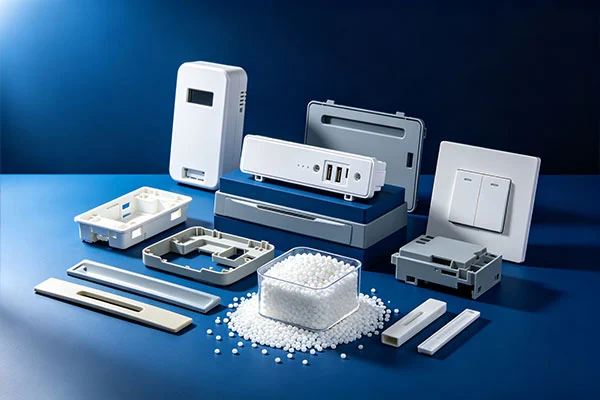
Glass Fiber Reinforced PBT is used in molded components where stiffness, dimensional stability, electrical performance, or thermal performance is important.
Typical applications include:
The suitable grade depends on the actual operating conditions rather than the application name alone.
When comparing two PBT GF30 materials, the comparison should go beyond glass fiber percentage.
Important information includes:
| Comparison Item | Why It Matters |
| Tensile strength | Indicates resistance to tensile loading |
| Flexural strength | Useful for parts subjected to bending |
| Flexural modulus | Indicates material stiffness |
| HDT | Helps assess dimensional performance at elevated temperature |
| Water absorption | Relevant to moisture-sensitive applications |
| Hydrolysis resistance | Important for hot-water or humid environments |
| Flame retardancy | Required for certain electrical and electronic applications |
| Melt flow | Affects filling of thin or complex molds |
| Shrinkage | Important for mold and dimensional design |
| Surface appearance | Relevant to visible molded components |
A material should be selected by matching these properties to the part requirements rather than choosing a grade based only on its GF designation.
Different reinforced PBT formulations are developed for different performance requirements.
| Grade Type | Typical Reason for Selection |
| Standard Glass Fiber Reinforced PBT | General improvement in stiffness and strength |
| High-Flow Reinforced PBT | Thin-wall or complex injection-molded parts |
| Hydrolysis-Resistant PBT | Components exposed to moisture, hot water, or humid conditions |
| Low-Warpage PBT | Parts requiring tighter dimensional control |
| Flame-Retardant PBT | Electrical and electronic applications with flammability requirements |
Grade names and available formulations vary by producer. The technical data sheet for the exact grade should be used for qualification and substitution decisions.
For material sourcing, providing the application and technical requirements helps narrow down suitable grades.
Useful information includes:
A current TDS, SDS, and relevant compliance documentation can be reviewed when required for the project.
Yuyao Nianjing Import & Export Co., Ltd. handles plastic raw material sourcing and international trade, including PBT and reinforced PBT grades.
For a Glass Fiber Reinforced PBT requirement, Nianjing can help compare available grades based on reinforcement level, application requirements, technical data, and purchasing specifications. This is particularly useful when a project requires an alternative grade or when the original material specification needs to be matched with an available supply option.
The final selection should be confirmed against the producer's current technical documentation and the requirements of the molded part.
Not necessarily. GF30 describes the approximate reinforcement level, but different grades can have different mechanical, thermal, flow, shrinkage, hydrolysis, and flame-retardant properties. A technical comparison should be completed before substitution.
No. Higher reinforcement can increase stiffness and strength, but it can also increase anisotropic shrinkage and make surface appearance and processing more sensitive. The required performance of the finished part should determine the grade.
Hydrolysis-resistant grades are worth evaluating when molded components may experience moisture, hot water, steam, or humid operating conditions. The specific environmental conditions should be compared with the grade manufacturer's test data.
The current material grade, required glass fiber content, application, processing method, performance requirements, color, quantity, and relevant compliance requirements are useful starting information.
Yes. A specific grade, equivalent grade, or required property range can be used as the basis for sourcing. Availability and technical equivalence should be confirmed against current supplier documentation.
PBT Resin
PBT GF15
Hydrolysis Resistant PBT
Flame Retardant PBT
Low-Warpage PBT
High-Flow PBT
Address
China Plastics City, Yuyao City, Ningbo City, Zhejiang Province, China
Tel
Looking for a specific plastic material, brand, grade or quantity? Send your requirements to Nianjing for sourcing and availability confirmation.
Please include the material name, manufacturer or brand, grade, quantity, application and delivery requirements when available. If you are unsure about the grade, simply describe your application and requirements.
Nianjing will review your inquiry and check suitable sourcing options based on your requirements.